John Locke Quotes
If we allow the Jews to have dwellings amongst us, why should we not allow them to have synagogs [houses of worship]?
John Locke, 1632-1704, English Political Philosopher, Letter Concerning Toleration, 1689
Sourced by: Eigen's Political and Historical Quotations


The Roman Empire of 70 million people contained at the time 7 million Jews—the vast majority of the world’s Jews.


Parton observed that the United States, by giving legal rights to Jews, set an example which improved the condition of Jews in many countries of Europe. There was much personal Anti Semitism in America then, but there was little difficulty for Jews in dealing and interacting with the government. America’s very existence and success since Independence was observed by much of Europe, and many tended to emulate the United States in some things. For many Europeans, the fact that Jews could be given all the rights of citizenship and nothing adverse was caused by that was the first time they had ever seen what their old cultures had feared for generations. The Papal States and Russia were as officially anti-Semitic as in the past while Sweden had recently given Jews full rights as citizens just as in the United States.


Henry of Navarre. This edict made the Huguenots and other Protestants legal in France whereas only 26 years earlier 50,000 of them had been slaughtered in France by the Catholics. It wasn’t a century before the Catholics reneged. See {617765}.

Quintus Septimius Florens Tertullianus. This quote is historically very important as it is one of the first expressions of religious tolerance. Tragically, this principle was ignored by most Christians for over a millennium. Some Christians still ignore it. See {626754} for a modern example.


Kennedy was being hurt be fears that as a Catholic, he would be beholden to the Pope and the Catholic Bishops. There were many protestants who believed that the Catholic Church was antithetical to democracy and some who even believed that Catholicism was the religion of Satan. Kennedy decided to confront the issue head on.
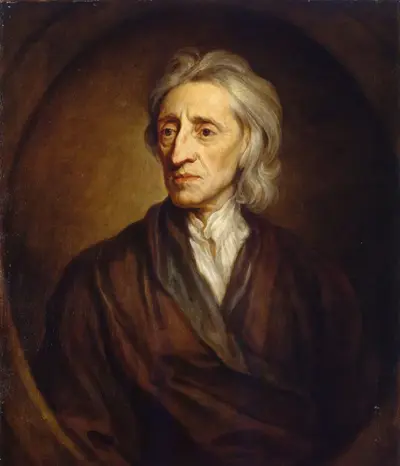
John Locke FRS was an English philosopher and physician, widely regarded as one of the most influential of Enlightenment thinkers and commonly known as the "Father of Liberalism". Considered one of the first of the British empiricists, following the tradition of Sir Francis Bacon, Locke is equally important to social contract theory. His work greatly affected the development of epistemology and political philosophy. His writings influenced Voltaire and Jean-Jacques Rousseau, and many Scottish Enlightenment thinkers, as well as the American Revolutionaries. His contributions to classical republicanism and liberal theory are reflected in the United States Declaration of Independence.
