Thomas Paine Quotes
If the present generation, or any other, are disposed to be slaves, it does not lessen the right of the succeeding generation to be free: wrongs cannot have a legal descent.
Paine, Thomas. Rights of Man. J. Johnson, 1791, p. 17.

Although English, Cobett spent time in America and published a newspaper, The Porcupine Gazette, in Philadelphia. We was very conservative but on the issue of slavery his resembled a liberal point of view. He never used sugar, coffee, or rum because slave labor produced them. However, he advocated legally enslaving lazy people, blacks and whites, who would not work.


As a key member of Lincoln’s cabinet, William H. Seward was most concerned with preserving The Union. However, since the Constitution was written in 1787, there had been compromises made with the pro slavery forces of the South to give them proportionally more political power and to avoid interfering with the institution of slavery. The Dred Scott Supreme Court decision forced the Northern States to actively cooperate in enforcing and maintaining slavery. Large numbers of abolitionists had reached their limit and wanted no more compromises regarding slavery. Mrs. Seward was one of those. This quotation also illustrates the influence that some women had in politics even though women could not vote. Frances Seward was very much a political partner with her husband who was favored to beat Lincoln for the Republican Presidential nomination.


She was referring to the political leaders of the South who were patriots and slave owners.


For a similar application of the law to all see the Massachusetts Body of Liberties over a century earlier.


1st Earl of Mansfield
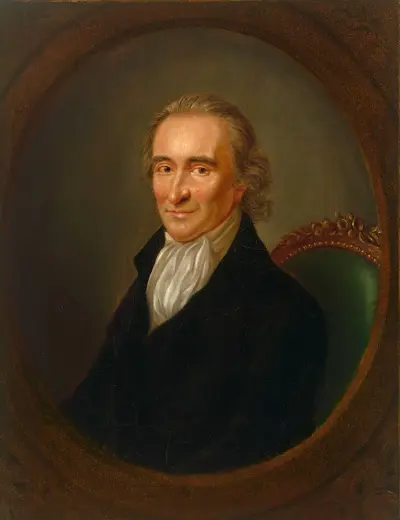
Thomas Paine was an English-born American political activist, philosopher, political theorist, and revolutionary. He authored Common Sense (1776) and The American Crisis (1776–1783), the two most influential pamphlets at the start of the American Revolution, and helped inspire the patriots in 1776 to declare independence from Great Britain. His ideas reflected Enlightenment-era ideals of transnational human rights. Historian Saul K. Padover described him as "a corsetmaker by trade, a journalist by profession, and a propagandist by inclination".
