Marquis de Lafayette Quotes
If the king refuses the constitution, I shall oppose him; if he accepts it, I shall defend him; and the day on which he gave himself up as my prisoner secured me more fully to his service than if he had promised me half his kingdom.
Lafayette, Marie Joseph Paul Yves Roch Gilbert Du Motier. Memoirs, Correspondence and Manuscripts of General Lafayette. Vol. 3, Saunders and Otley, 1837.


This is one of the best examples of the Mongol Terror Tactics. They had a completely mobile fighting force. They could evade any large army and attack fixed towns and villages, while opponents could not defend all the locations without enormous expense. The calculus was often that it was cheaper to pay the Mongols tribute than it was to even beat them in the field. In this case, the Hungarians settled and a Mongol satellite group—the Cumans (Western Kipchaks)—moved into Hungary and have been a minority there ever since.


The Ambassador without any authority from the State Department or the Congress engineered a group that staged a coup in Hawaii which overthrew the popular government monarchy and then “asked” to be ruled by the United States. Hawaii had been a stable independent nation, but many American businessmen and adventurers had designs on the valuable Hawaiian land. President Cleveland tried to remedy the situation {643147}, but it was too late. Haraii had become a U. S. territory and there was no going back.


Drake named the land Nova Albion.


1st Duke of Wellington. The King was somewhat delusional, and there is no historical records of his ever having personally fought in the Napoleonic wars at all. This quotation has often been nominated for the most tactful in history.


In the British Constitutional Monarchy of the Victorian Era, the Queen still possessed enormous power and many in Parliament was constantly trying to have Parliament assume many of the Queen’s powers. The Prime Minister was in an awkward position. On the one hand, he was the Queen’s Prime Minister and leader of HER government. At the same time he was the leader of the political party that had won the last Parliamentary election. His party was trying to usurp some of the Queen’s powers and Peel explained to the Queen’s assistant that he would generally side with the Queen against his own party. It is doubtful that Anson and the Queen believed Peel on this point as his position as Prime Minister depended not on his being elected by the voters but by his party members of Parliament. In modern times, the British monarch has few real powers but is still very influential so there are no struggles over power with Parliament.
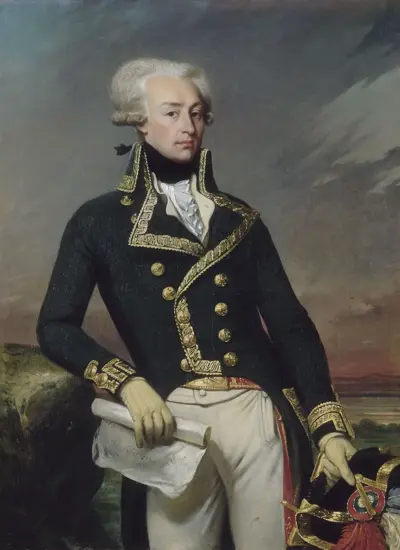
Marie-Joseph Paul Yves Roch Gilbert du Motier, Marquis de La Fayette, known in the United States as Lafayette (/ˌlɑːfiːˈɛt, ˌlæf-/, French: [lafajɛt]), was a French aristocrat and military officer who fought in the American Revolutionary War, commanding American troops in several battles, including the siege of Yorktown. After returning to France, he was a key figure in the French Revolution of 1789 and the July Revolution of 1830. He has been considered a national hero in both countries.
