Koila Nailatikau Quotes
If the chiefs as leaders are going to earn and maintain the respect of the people of Fiji and preserve the uniqueness of the traditional and cultural structures they need to also recognize that the differences that exist between us all cannot and should not be ignored. We must speak with fairness, responsibility and goodwill toward all ethnic groups.
Fiji is a multi-racial and multi-cultural society consisting of descendants of the original Fiji natives, immigrants from India and Westerners. The traditional Fiji chiefs wanted their positions of leadership recognized in the Fijian legal and governmental system. However, many of them were hostile to the Indians who were economically very successful and not part of the traditional tribal structure. But they and the Europeans are Fiji citizens just like the native descendants, and the traditional chiefs, if they wanted to represent the government had to represent and respect all—not just the traditional natives.
Adi Koila Mara Nailatikau, Fijian Senator, Senate Speech, August 24, 2005
Sourced by: Eigen's Political and Historical Quotations


This is a terrific statement of Americanism at any time, but it is particularly notable in 1888. At that time anti-Catholicism and anti-Semitism were both heavy throughout the country. Jim Crowe and racism was rampant, Orientals were heavily discriminated against especially on the West Coast. Irish and Italians were not wanted in most of America except as manual laborers.

Fiji is a nation which at the time was beset with ethnic strife and tension. In addition to the religious tension there were Indian immigrants who tended to be economically more successful than the indigenous Fijians. There was an English tradition from the days of being a British Colony and the traditional tribal leaders and chiefs were being disenfranchised by modern democratic structures. The military was not under the control of the civilian government and coups pitted some ethnic groups against others.


The Afrikaner’s were the descendants of the Dutch farmers who were the first white immigrants to South Africa. They ended up dominating the political scene of South Africa and other white minorities had little political power. The Blacks and Coloreds (Indians) had none in the Afrikaner Apartheid regime. This was a constant theme of the Afrikaners to the other White minorities that if the Afrikaner Apartheid and control of the Black majority, the other white minorities would suffer, This turned out not to be true however. When the Afrikaners were pushed out of control, Nelson Mandella led the Blacks to a non-vengeful creation of a new state, where most of the white minorities were reasonably happy except for some of the diehard Afrikaner racists. Botha was the political leader of the Afrikaners.

The “Proms” have been traditional concerts in England for years. However, there are great differences in the musical taste and preferences of different socioeconomic and cultural subgroups. And many of these groups do not care for the type of music, the overt patriotism or the formality. The issue for England is do they change the traditional public concerts to reflect the tastes of all groups or do they fund different concerts appealing to the different cultures. The one supports unity and the other a type of separatism.


After Independence, the original credo of the Indonesian hero and leader was slowly ignored. The Muslim majority established Islam as the dominant religion and began to create laws that discriminated against Christians, Hindus, Buddhists, and Jews. The ethnic Chinese had been very successful in business and commerce and soon they were discriminated against and even physically attacked in Pogroms.


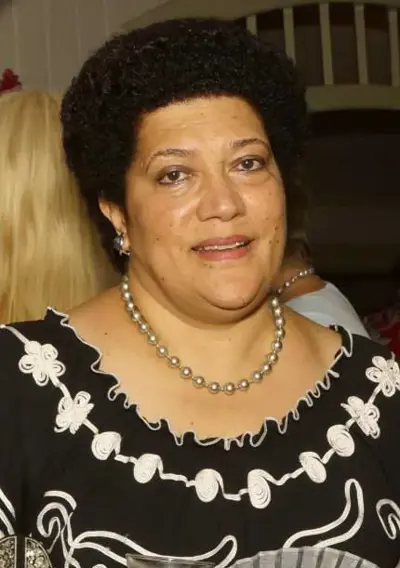
Adi Koila Mara Nailatikau is a Fijian lawyer, who has served as a diplomat and politician. She was also First Lady of Fiji from 2009 until 2015, as the wife of Ratu Epeli Nailatikau, the President of Fiji.
