Henry A. Kissinger Quotes
If Tehran insists on combining the Persian imperial tradition with contemporary Islamic fervor, then a collision with America — and, indeed, with its negotiating partners … — is unavoidable. Iran simply cannot be permitted to fulfill a dream of imperial rule in a region of such importance to the rest of the world.
Henry A. Kissinger, U.S. Secretary of State (Republican), U.S. National Security Advisor, Nobel Peace Laureate, "The Next Steps With Iran",. The Washington Post. July 31, 2006
Sourced by: Eigen's Political and Historical Quotations


Shariatmadari sometimes serves as a spokesman for major Religious officials of the Iranian theocracy. This quotation is particularly interesting as it illustrates a particular world view of some Iranian leaders that makes it almost impossible to cope with problems through diplomatic means. The argument is that if Iran negotiates with America on any issue, Iran would be a poor example to other Islamic nations because they would conclude that Iran and all Muslim countries had no choice but get along with America. The idea that negotiating with a nation means that a country is “getting along” with the other country is of course the absurdity. But it is believed by many in the Muslim world. Ironically that same view is held by “hard liners” in America and most other countries in addition to Iran. There are Americans who do not believe that we should negotiate with Iran at all because the negotiations gives them a status that they do not deserve. And it connotes a level of approval by America of Iran just to talk with them.


At the time our strongest allies in the Middle East were Monarchies, dictatorships, and Principalities. See {586706}


Referring to the proposal to Annex Hawaii in 1887:


At the end of WWII there was much tension between Russia and the Anglo-American alliance. This plan was developed but never implemented. See {613195} for Prime Minister Winston Churchill’s description of the invasion idea.

This quotation is important because it was typical of the view of many Muslims in the world in the beginning of the 21st century. However. What most of these Muslims ignore is the fact that Islamic Nations have ben warring with each other since there have been Islamic nations. In addition, the different Muslim sects have been brutally trying to exterminating each other since the death of The Prophet and civil war broke out over his successor.


At the time Pakistan was almost a failed state which had nuclear weapons. They took large amounts of American aid (military and civilian) and claimed that they were an ally in the War on Terror. On some occasions they deployed their troops against fundamentalist terrorists. On others they shielded terrorists and provided them with sanctuary from attack, intelligence and allowed terrorist leaders to not only live in Pakistan but operate their organizations from Pakistan. They supported radical Madrassas (religious schools) that taught hate and terrorism, and armed terrorists in the hopes that they could be used against their enemy India while the terrorists themselves killed more Pakistanis by far than the Indians ever did. The civilian government was subservient to the military which itself was subservient to the Intelligence Arm.


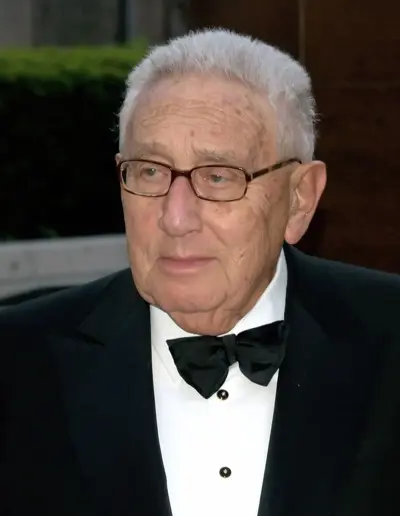
Henry Alfred Kissinger KCMG is an American politician, diplomat, and geopolitical consultant who served as United States Secretary of State and National Security Advisor under the presidential administrations of Richard Nixon and Gerald Ford. A Jewish refugee who fled Nazi Germany with his family in 1938, he became National Security Advisor in 1969 and U.S. Secretary of State in 1973. For his actions negotiating a ceasefire in Vietnam, Kissinger received the 1973 Nobel Peace Prize under controversial circumstances, with two members of the committee resigning in protest.
