Chrysippus Quotes
If something were brought about without an antecedent cause, it would be untrue that all things come about through fate. But if it is plausible that all events have an antecedent cause, what ground can be offered for not conceding that all things come about through fate?
Cicero, Marcus Tullius. On the Orator: Book 3. On Fate. Stoic Paradoxes. Divisions of Oratory. Translated by H. Rackham, Harvard University Press, 1942, p. 219.


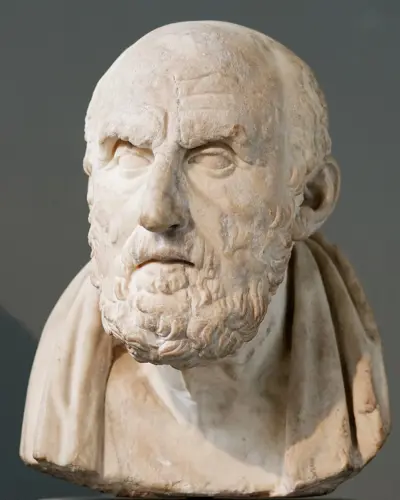
Chrysippus of Soli (/kraɪˈsɪpəs, krɪ-/; Greek: Χρύσιππος ὁ Σολεύς, Chrysippos ho Soleus; c. 279 – c. 206 BC) was a Greek Stoic philosopher. He was a native of Soli, Cilicia, but moved to Athens as a young man, where he became a pupil of Cleanthes in the Stoic school. When Cleanthes died, around 230 BC, Chrysippus became the third head of the school. A prolific writer, Chrysippus expanded the fundamental doctrines of Zeno of Citium, the founder of the school, which earned him the title of Second Founder of Stoicism.
