William Lloyd Garrison Quotes
If our Constitution does not guarantee freedom for all, it is not a Constitution I can subscribe to. And now let me give the sentiment which has been, and ever will be, the governing passion of my soul: Liberty for each, for all, for ever.
William Lloyd Garrison, 1805-1879, Editor & Abolitionist, Speech, Fort Sumter, SC, April 15, 1865
Sourced by: Eigen's Political and Historical Quotations

Hayward claimed that Wilson was the first American President who ever criticized the American Constitution. Many do not agree as Madison and Jefferson in part, along with most other Americans, found the Constitution so wanting that it was ratified only on condition of the passage of the Bill of Rights. Jackson, was distressed by the limitations on the President and many others had their objections, but Wilson, before he became a politician was a prominent academic political scientist and wrote voluminously and had an intellectual following so his criticism was not considered so “political” as others.


Jefferson had deliberately modified John Locke’s phrase “life, liberty and property.


The preamble to this declaration of womens’ rights cleverly beginy s with the words of the Declaration of Independence with the single change that “all men” is replaced with “all men and women.” The message was clear. If the founders had a moral right and duty to revolt for these objectives women would be justified and duty bound to make similar efforts. That message terrified many men of the era.


Jefferson’s original was: We hold these truths to be sacred and undeniable that all …


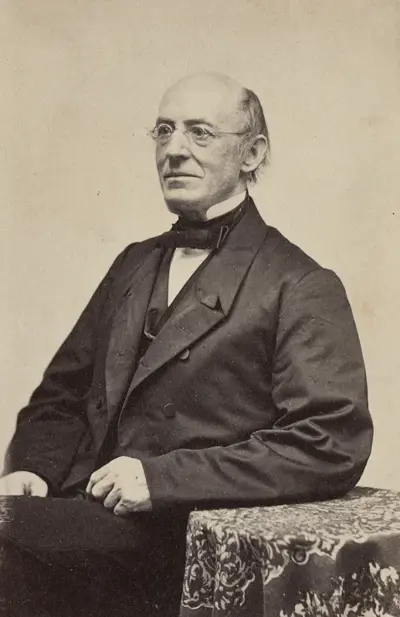
William Lloyd Garrison, who signed and printed his name Wm. Lloyd Garrison, was a prominent American abolitionist, journalist, suffragist, and social reformer. He is best known for his widely-read anti-slavery newspaper The Liberator, which he founded in 1831 and published in Boston until slavery in the United States was abolished by Constitutional amendment in 1865. He was one of the founders of the American Anti-Slavery Society, and promoted immediate and uncompensated, as opposed to gradual and compensated, emancipation of slaves in the United States.
