Alberto Fujimori Quotes
If I do not stand for a third term the opposition will undermine all that I've achieved.
The president had served two terms. The Constitution, passed in 1993 and endorsed by him, prohibited a third term. However, by 1999 he was considering a third term. There appeared to be no one in his political party who could beat the opposition who had been very critical of his autocratic Presidency.
Alberto Fujimori, President of Peru, December 1999, Quoted on BBC News, December 27 1999
Sourced by: Eigen's Political and Historical Quotations


The MDC was the opposition party which won the election which Mugabe would not recognize.

That is not terribly different from other democracies including the United States.


Morales, a full blooded Indian in a country where whites of European origin had always dominated the politics was warned against running in an election that was likely to be rigged against him. Even if he won the plurality of the vote, Bolivian law provided for the Parliament with few of his sympathizers to elect the president. However, Morales made this famous statement in a country where the last two Presidents had been brought down by people rioting in the streets. Morales surprised everyone be not only winning the plurality but winning by a large majority.

The reference was to President George W. Bush.

Roosevelt, after refusing to run for a third term in 1908, decided to run in 1912:


When he became president himself, he not only served 10 years but changed the constitution so that he could serve forever and was still President over 20 years later. See {636079} for a similar view of term limits

The President’s party in Congress stands election every two years, so the president only has a little more than a year to get tough things done. The mayor, in contrast, had a four term and because he was a bipartisan independent representing both parties, didn’t need to campaign for his party members on the City Council. Therefore, he thought, that it was easier for him to take a controversial position and spend the time to persuade the people and build support for the position.

When he became president himself, he not only served 10 years but changed the constitution so that he could serve forever and was still President over 20 years later. See {620732} for another similar statement.

This quotation perhaps was the most critical in Roosevelt’s political career. After winning the presidential election in his own right, that evening at a press conference he called, he not only committed to serving only two terms—then a custom and not law as it would be after WWII—but he also committed that his first three and a half years where he was not elected but assumed the presidency upon McKinley’s assassination would count as a full elected term. He therefore in 1908 could not run again even though the public wanted him to, and he might have liked another term. More important historically was 1912. Roosevelt had chosen his close friend and colleague William Howard Taft to succeed him and with Roosevelt’s support he was elected in 1908. But Taft’s wife who had always been his closest political advisor and reviewer of all his policies and speeches, had a stroke shortly after Taft was elected. Taft’s performance as President was very disappointing to Roosevelt, and he ran against Taft in the 1912 Republican nominating campaign. The very conservative Republicans were against Roosevelt, but many of those who liked him were distressed that he was reneging on his pledge not to run for a 3rd term. Roosevelt lost, and famously started the Bull Moose Party and ran against Taft and Wilson. He outpolled Taft but with the split Republican vote, Woodrow Wilson won the Presidency. This pledge haunted Roosevelt for the rest of his life.

This quotation illustrates the "winner take all" conceopt of many political cultures that call themselves and think of theselves as a democracy. But a true democracy does not allow a tyranny of the majority--especially a very narrow minority.
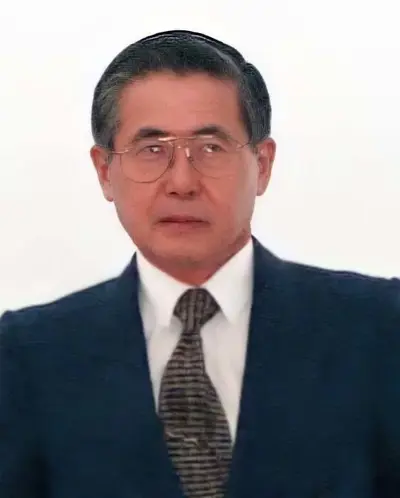
Alberto Kenya Fujimori Inomoto is a former Peruvian engineer and politician who served as the President of Peru from 28 July 1990 until his downfall on 22 November 2000. A controversial figure in Peruvian politics, his government is credited with the creation of Fujimorism, defeating the Shining Path insurgency and restoring Peru's macroeconomic stability. Fujimori ended his presidency by fleeing Peru for Japan amid a major scandal involving corruption and human rights abuses. Even amid his prosecution in 2008 for crimes against humanity relating to his presidency, two-thirds of Peruvians polled voiced approval for his leadership in that period.
