William Godwin Quotes
If government be founded in the consent of the people, it can have no power over any individual by whom that consent is refused.
William Godwin, 1756-1836, English Philosopher, An Inquiry Concerning Political Justice, 1793
Sourced by: Eigen's Political and Historical Quotations


See Charles James Fox, John Milton, Jeremy Bentham, Grover Cleveland, Henry Clay, Benjamin Disraeli and Woodrow Wilson for similar expressions of this idea.


Although written in 1770, it was not formally published and available until 1774


“Magistrates” at the time were rulers and heads of government and state. There was little or no separation of powers and the chief magistrate could make edicts and laws, enforce them and be the judge and jury as well. In the United States, the President is also called the “Chief Magistrate” even though his powers are only within the Executive Branch. For us today, “Magistrate” usually refers to a judge or other official of the Judicial Branch.


In the Western World, The Roman Catholic Church was the government for many years and theology and political philosophy were thereby conflated.


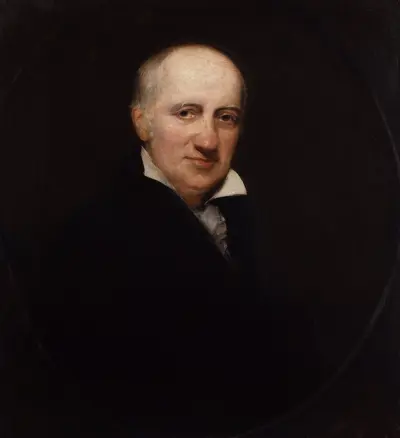
William Godwin was an English journalist, political philosopher and novelist. He is considered one of the first exponents of utilitarianism and the first modern proponent of anarchism. Godwin is most famous for two books that he published within the space of a year: An Enquiry Concerning Political Justice, an attack on political institutions, and Things as They Are; or, The Adventures of Caleb Williams, an early mystery novel which attacks aristocratic privilege. Based on the success of both, Godwin featured prominently in the radical circles of London in the 1790s. He wrote prolifically in the genres of novels, history and demography throughout his life.
