Carl Schmitt Quotes
All significant concepts of the modern theory of the state are secularized theological concepts.
In the Western World, The Roman Catholic Church was the government for many years and theology and political philosophy were thereby conflated.
Carl Schmitt, 1888–1985, German Political Scientist, Nazi Judge, President of the Union of National-Socialist Jurists, Political Theology, 1922
Sourced by: Eigen's Political and Historical Quotations


In 1848 a number of revolutions flared throughout Europe with a call for democracy rather than monarchy. The Prussian king was one of those who really believed that he was selected by God to rule, was very frightened and tried to enlist the Queen and England to present a united front against the revolutionaries. England, which had already had a strong functioning parliament and extensive voting suffrage, protected most of the rights of its citizens and was a Constitutional Monarchy where there were limits to the power of the monarch. Further, Victoria was extremely popular and in many ways was far ahead of the electorate in terms of modern democratic reforms. So she was not in the panic of many of the other crowned heads of Europe were in. Somewhat following the example of England, King William IV allowed a parliament and minimized the strong military role that characterized Prussia. Most of the 1848 revolutions failed to sieze governments but, as with Prussia, forced reforms in what was a long movement to European democracy that would take another 150 years. Note also the logic about religion. Since the revolutionists did not believe in the divine right of kings, they opposed God’s will on earth. Therefore, they opposed God and must be atheists. Almost all counter revolutionary accusations included the claim—often not true—that the revolutionaries were atheists.


This is a very important political, historical, and philosophical quotation. This is a view that is very common amongst many Americans—especially those who are religious. As a factual matter, it is not clear that ALL the founding fathers personally believed in the creator--God. All the views have never been discerned. However it is almost certain that the majority of the Founders so believed. The complication with taking this viewpoint too literally is that while our rights may have come from God, it is men who determined exactly what rights would be enumerated on our constitution. For example. the original draft of the Constitution did not include, the right to a free press, the right of due process, the right of being free from religious compulsion and others. Yet it passed. Then other men and women wanted more rights added and the Constitution was ratified on condition that the Bill or Rights would be incorporated as the first 10 amendments. There were other rights that were not explicitly mentioned. For example, there is no right to an education mentioned in the Constitution or any of the amendments. Blacks had no rights until additional amendments were passed. And later there was an amendment that denied Americans the right to drink alcohol. Then another that gave the rights back. There are rights that other nations have which we do not—ie the right to medical care. Which if these did God grant and which, not? So even if we assume that every one of the founding fathers not only believed in God, but believed the rights were all God given, we would still be in the practical dilemma of having to specify the language of each right and always to, by amendment, adding additional rights or modifying or even deleting older rights. Many believe that Americans were divinely inspired when we added (or changed) rights. Others, not. However, regardless, we must go through the same procedures of enumerating American rights and amending the constitution. So the process is the same for both those who believe that our rights come from God and those who do not. To change rights, we need the action of Americans divinely inspired or otherwise, but they can and have been changed. For example, before 1963 Americans did not have a right to use birth control devices. After the Supreme Court Griswald v. Conn. We did and now have a right to use birth control devices. The mode that rights are manifested, defined, enumerated and implemented is a political one—one that in our American system allows us all to implement that system whether or not we believe that our rights come from our Creator.


There is a certain redundancy in that “Fenian” means “Party.”
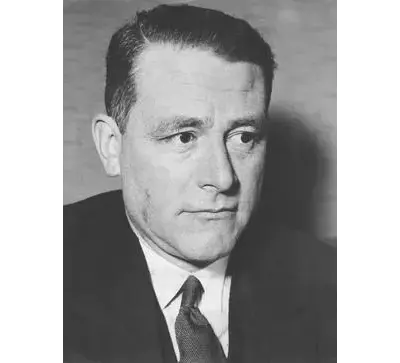
Carl Schmitt was a German jurist, political theorist, and prominent member of the Nazi Party. Schmitt wrote extensively about the effective wielding of political power. A conservative theorist, he is noted as a critic of parliamentary democracy, liberalism, and cosmopolitanism, and his work has been a major influence on subsequent political theory, legal theory, continental philosophy, and political theology, but its value and significance are controversial, mainly due to his intellectual support for and active involvement with Nazism. Schmitt's work has attracted the attention of numerous philosophers and political theorists, including Giorgio Agamben, Hannah Arendt, Walter Benjamin, Susan Buck-Morss, Jacques Derrida, Jürgen Habermas, Waldemar Gurian, Jaime Guzmán, Reinhart Koselleck, Friedrich Hayek, Chantal Mouffe, Antonio Negri, Leo Strauss, Adrian Vermeule, and Slavoj Žižek, among others.
