Ronald Kessler Quotes
If FBI agents can't be trusted to wiretap within the law, why trust them to carry weapons or make arrests?
Kessler, Ronald. The Bureau: The Secret History of the FBI. St. Martin's Press, 2002.

He was the Chairman of the Senate Judiciary Committee.


Historically, the Privacy Issues have taken a long time to be reflected in laws or regulations. Technologists are far ahead of the lawyers and politicians.

He was explaining his reasons for resigning in 2005 from the number two position in the Justice Department. The George W. Bush administration had implemented a program of secret wiretapping and surveillance of American citizens in America which required the authorization of the Justice Department which had determined that the program as it was being implemented violated the law. The Attorney General was ill in the hospital but had told Comey that he would not sign the authorization. The White House then pressured Comey to sign and he refused, and in a similar replay of the Watergate “Saturday Night Massacre”, the number three man at Justice would have been ordered to sign. His resignation convinced President Bush to alter the program to take account of the Justice Department objections.

Gates believed that ideally the government would have the trust of the people to access critical data, but that at the moment there are many who do not trust the government. Unfortunately, the FBI on many occasions have themselves broken the law and targeted people who had political and social viewpoints of which the FBI leadership did not approve. The CIA has on many occasions violated the law and repeatedly lied to Congress and even Presidents. The National Security Agency has also, in its zeal to carry out its mission skirted the law and the Director of National Intelligence blatantly deceived Congress and was exposed by the Snowden releases. Gates was an optimist and thought that the government could regain the necessary trust to allow it to have access to virtually all data in order to best protect society from things like terrorism with biological weapons.


He was the Chairman of the Senate Judiciary Committee. The NSA had hacked into the servers of these firms and others that were located out of the country. (They would need to have a warrant if inside the country.) The companies had never known it until Edward Snowden made this practice public. The result was, the public was learning that there was no privacy in any of their e-mail, social media activity, exchange of photos or videos or anything else. The companies feared that this would then harm their business, and that the techniques NSA used to hack there servers would then be discovered and used by others to steal identities, credit cards and do such other damage to customers. Even if the particular hacking methods were not leaked to the bad guys, they, knowing that the servers were vulnerable, would be encouraged to work to figure it out.
He was the Chairman of the Senate Judiciary Committee.


See {635177} for the event that triggered the statement.

Snowden, was a contract worker for Booz Allan assigned to the National Security Agency (NSA). He felt that some of the NSA activities were illegal and unethical and tried to complain to NSA officials who rebuffed him. Despite the fact that he had signed an agreement not to do so, he copied many critical, classified documents that exposed much of the NSA activities that the NSA officials had denied existed—including lying under oath to the Senate. He then made many of them public, violating his oath, breaking the law, and opening up an entire area of government spying which most Americans knew nothing about and about which senior government officials had lied under oath to Congress. They of course wanted to prosecute Snowden who had told the truth, while they had lied. For many Americans, this became a moral and ethical conundrum.


Snowden, was a contract worker for Booz Allan assigned to the National Security Agency (NSA). He felt that some of the NSA activities were illegal and unethical and tried to complain to NSA officials who rebuffed him. Despite the fact that he had signed an agreement not to do so, he copied many critical, classified documents that exposed much of the NSA activities that the NSA officials had denied existed—including lying under oath to the Senate. He then made many of them public, violating his oath, breaking the law, and opening up an entire area of government spying which most Americans knew nothing about and about which senior government officials had lied under oath to Congress. They of course wanted to prosecute Snowden who had told the truth, while they had lied. For many Americans, this became a moral and ethical conundrum.
The NSA had been publicly exposed (by the Edward Snowden leaks) as collecting data on virtually every American’s phone and on-line conversation, and criticism was rampant.
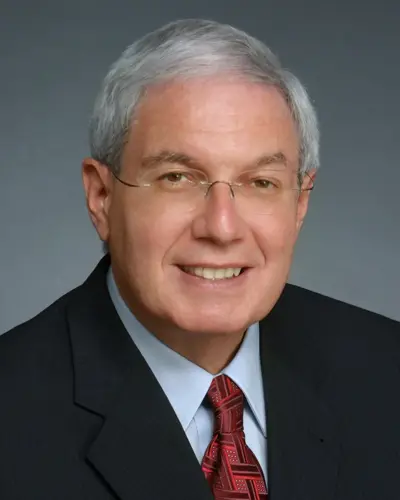
Ronald Borek Kessler is an American journalist and author of 21 non-fiction books about the White House, U.S. Secret Service, FBI, and CIA.
