Elizabeth Esty Quotes
If elected members of any body - whether it's a state house or Congress - were not willing to take career-ending or at least election-losing votes, I would not have the right to vote today.
Esty, Elizabeth. Congressional Record, Government Publishing Office.


1st Baron Macaulay. Macaulay was opposed to universal suffrage, and when John Stuart Mill and others started a movement for allowing all males to vote, this was one of the tactics to stave off allowing the lower classes to vote.


Hunt gave as an example Mary Smith of Stanmore. This quotation is very interesting in the history of women’s suffrage. Hunt was a strong advocate for Universal Suffrage (See {616653}.) At the time, even men had to be a taxpayer and own a sufficient amount of property to vote. Less than 20% of the population of Britain were allowed to vote. The argument at the time was that the husband would represent the family’s interest at the ballot box and there was no need for women to vote. But by facing parliament with the logical inconsistency of its position, he was able to make his point, although there were very few women like Mary Smith who were single and had the economic resources to qualify. Most widows remarried so even if they had economic resources, there was a man who could assume the then perceived role of head of the household.


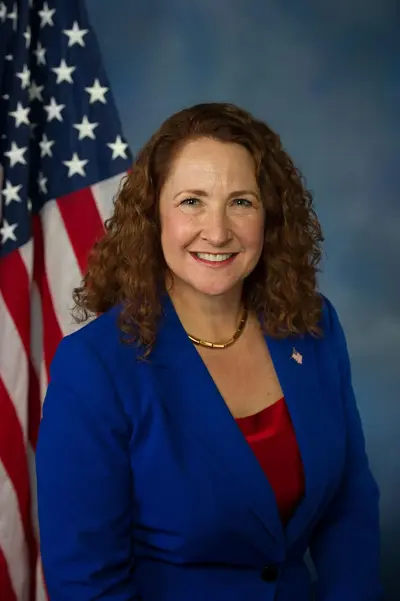
Elizabeth Esty is an American politician who served as a U.S. Representative from Connecticut's 5th congressional district from 2013 to 2019. A Democrat, she previously was a member of the Connecticut House of Representatives, representing the 103rd Assembly District, which consisted of Cheshire and parts of Hamden and Wallingford. She also served two terms on the Cheshire Town Council. The 5th congressional district spans central and northwest Connecticut, including Waterbury, Danbury, New Britain, Meriden, Torrington, Litchfield County, the Farmington Valley, Newtown, and Esty's hometown of Cheshire.
