Joseph Stalin Quotes
If any foreign minister begins to defend to the death a "peace conference," you can be sure his government has already placed its orders for new battleships and aeroplanes.
Joseph Stalin, 1879-1953, Russian Premier, Speech, January 1913
Sourced by: Eigen's Political and Historical Quotations


There were many who thought that the Russians would view the Mutual Security Act as aggressive and they might respond with some kind of aggressive retaliation and this could lead to war. Others felt that containment would reduce the likelihood of war.

Hobson, like Mark Twain in America, was a major critic of imperialism.


Baruch was the first politician to use of the phrase "cold war." It had actually been originated by a friend and speechwriter, Herbert Bayard Swope, who had proposed using the phrase earlier. Baruch thought that too early and waited.

Russia announced ballistic missile testing in response to NATO announced deployment of a missile shield across Europe. It was the first mini arms race since the fall of the Soviet Union.


Samuel Langhorne Clemens, 1835-1910. His view was that the quality of statesmanship at the time was bellicose and imperialistic. We had annexed Puerto Rico and Cuba and then occupied the Philippines. He argued that if we did not have the bombastic and expansionist statesmen like McKinley and Theodore Roosevelt, we would not need so much armament to back them up.


Unusually for a scientist, Szilard was politically very astute. In this letter he predicted exactly what was going to happen in Europe which would be WWII. He was the leading scientist organizing the lobbying efforts with the Franklin D. Roosevelt administration to develop an atomic bomb.


He was discussing the conflict in the Ukraine between keeping their historical economic relationships with Russia and being more involved with Europe and the West. He observed that the Ukraine has been for centuries not only and integral part of Russia but played a huge role in the Russian Revolution of 1917. Kissinger urged Ukraine independence and relations with both Russia and Europe and not making the Russians feel that they have little or no influence over what was not very long ago a critical part of their country.

Truman had to deal with Stalin for many years. In earlier days he had a much more favorable view of the Russians. See {626410} for his view 22 years earlier.

McNamara stated that the Cuban Missile Crisis was more politically required than defense required. The Russians had nuclear missiles at the time that could reach the United States and didn’t really need missiles in Cuba to threaten America. Public opinion and the Republican Political doctrine persuaded President Kennedy that independent of safety and military factors, nuclear missiles in Cuba was a major political problem. See his comment to the President and the Other Officials dealing with the crises—{631968}.


The U. S. and Russia

The immediate crisis had been averted and no more nuclear missiles would enter Cuba. But we had no leverage to get the few that were already there removed and it would be politically very difficult for the Kennedy administration to get the public to accept ANY nuclear missiles in Cuba. Hence, Stevenson’s statement. See {634554}. Neither side had great intercontinental ballistic missile capability at the time, and we had placed a large battery of missiles in Turkey very close to the Russian border. This gave the U. S. a major military advantage. We could deliver many more nuclear warheads to Russia than they could to the United States. The Russians with this proposal hoped to even the capability. The military advisers and the security and State Department advisors all thought that the U. S. should not give up its nuclear superiority. However, we had no international legal basis for denying the Cubans the right to locate any weapons on their soil, so to prevent the Communists from having nuclear missiles in Cuba we would have to use force which could easily escalate into a nuclear war. Kennedy and McCone both thought that since we had intercontinental ballistic missiles in production and coming on line and would not need the Turkey Missiles to strike all over Russia. So giving up our missile advantage for a short time would not expose us to any undue risk. The other advisors worried that the production of the ICBMs could be delayed—weapons systems were (and are) notoriously longer in production than estimated or planned. They also thought that the morale of the military and civilian population would suffer when they learned that we had given away our military advantage. There was a macho element in their thinking in that we would be giving in to intimidation and look like we were afraid to fight. Last, the political advisors thought that the right wing hawks would pillory the administration for its cowardice in allowing itself to be intimidated by the Russians. Their doctrine was that when faced with force, the Communists will always back down. In the final deal we agreed to remove our missiles from Turkey in 6 months and this would be done in complete secrecy and the Russians would keep the deal secret. That way, Kennedy got 6 more months of production which turned out to have been enough. The public would never know till years later and the Conservatives would not be able to publicly castigate Kennedy. Meanwhile, the conservatives would continue to believe that the Russians backed down in the face of force—the naval blockade as this was ‘proved’ their doctrine when the Russians had not backed down at all. The strategy and tactics of the Kennedy administration are still analyzed and argued about today with many Americans just realizing that we did not intimidate the Russians with force or the threat of force to remove their Cuban missiles.

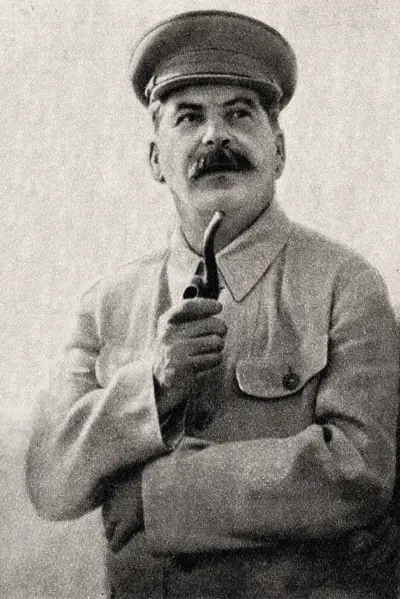
Joseph Vissarionovich Stalin was a Georgian revolutionary and the ruler of the Soviet Union from 1927 until 1953. He served as both General Secretary of the Communist Party of the Soviet Union (1922–1952) and Chairman of the Council of Ministers of the Soviet Union (1941–1953). Despite initially governing the country as part of a collective leadership, he ultimately consolidated power to become the Soviet Union's de facto dictator by the 1930s. A communist ideologically committed to the Leninist interpretation of Marxism, Stalin formalized these ideas as Marxism–Leninism while his own policies are known as Stalinism.
