Bernard Baruch Quotes
Although the war is over, we are in the midst of a cold war which is getting warmer.
Baruch was the first politician to use of the phrase "cold war." It had actually been originated by a friend and speechwriter, Herbert Bayard Swope, who had proposed using the phrase earlier. Baruch thought that too early and waited.
Bernard Baruch, 1870-1965, Businessman & Chairman, War Industries Board, U. S. Delegate to U.N. Atomic Energy Commission, Testimony, Senate War Investigating Committee, October 24, 1948
Sourced by: Eigen's Political and Historical Quotations


Compare this to Bernard Baruch's quotation about a cold war the year before.


Trieste was occupied by the British and Americans theoretically, but Tito’s Yugoslavian troops had done most of the WWII fighting and dying in the area and wanted control for the Russian Allies of which Tito was then one. There were frequent armed standoff’s of Anglo Americans and Yugoslav troops that could easily have evolved to full scale fighting. Nine months later, Tito broke with Stalin. An interesting historical fact is that Richard M. Nixon was one of the Congressional Delegation then visiting Trieste.


This editorial marked what most people agreed was the end of the Cold War.

1st Earl Baldwin of Bewdley. Baldwin has been castigated since WWII for being part of the “appeasement group” in England. As Prime Minister in 1935 he would not face the threat of Fascism, Germany and the Nazis and did not initiate a major arms buildup. Churchill, among others, never forgave him. See {626930} for Churchill’s view of Baldwin.


McNamara stated that the Cuban Missile Crisis was more politically required than defense required. The Russians had nuclear missiles at the time that could reach the United States and didn’t really need missiles in Cuba to threaten America. Public opinion and the Republican Political doctrine persuaded President Kennedy that independent of safety and military factors, nuclear missiles in Cuba was a major political problem. See his comment to the President and the Other Officials dealing with the crises—{631968}.


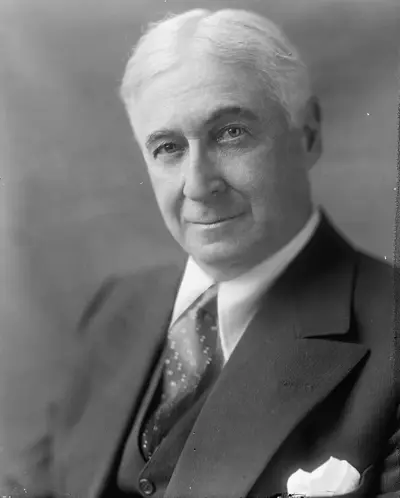
After amassing a fortune on the New York Stock Exchange, he impressed President Woodrow Wilson by managing the nation's economic mobilization in World War I as chairman of the War Industries Board. He advised Wilson during the Paris Peace Conference. He made another fortune in the postwar bull market, but foresaw the Wall Street crash and sold out well in advance. In World War II, he became a close advisor to President Roosevelt on the role of industry in war supply, and he was credited with greatly shortening the production time for tanks and aircraft. Later he helped to develop rehabilitation programs for injured servicemen. In 1946, he was the United States representative to the United Nations Atomic Energy Commission, though his Baruch Plan for international control of atomic energy was rejected by the Soviet Union.
