Hassan Rouhani Quotes
If America puts the enmity aside, if it initiates good will, and if it compensates for the past, the future situation between the United States and Iran will change.
Rouhani, Hassan. Interview with Steve Kroft. 60 Minutes, CBS News, 20 Sept. 2015.


His appeal was also in the name of concurring heads of state of Finland, Holland, Denmark, Norway, Luxemburg, and Sweden.

Conservative hard liner hawks in both countries wanted a much more contentious and hostile relationship between the two nations. Reagan especially had to cope with a significant base of his Republican support. In any attempted peace or disarmament negotiations, there are people in both nations who profit economically, politically or ideologically from continued strife. This always makes the process difficult.

2nd Viscount Melbourne. The “American treaty” was the Webster–Ashburton Treaty to adjust the final borders between Canada and the United States that were still in dispute from the War of 1812. Note that the British Prime Minister was critical of the position that was being taken be some British diplomats. In many American negotiations with Russia and others, there are hard liners who believe that the negotiators want too much to preserve peace and are not sufficiently willing to go to war for the nation’s principles and honor. As this quotation shows, this is not just an American phenomenon, but in almost all nations there are hard liners critical of all international negotiations and fearing that a desire for an agreement will undermine the positions that should be taken. This is an example where the hard liners were on the non American side.


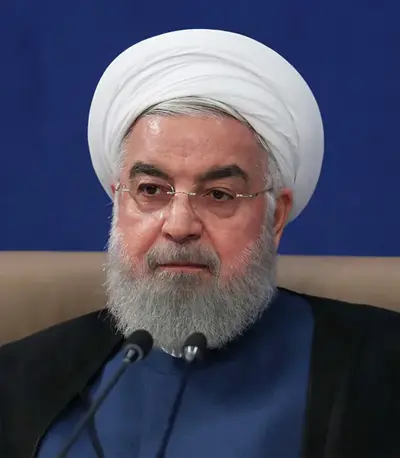
Hassan Rouhani is an Iranian politician serving as the seventh and current President of Iran since 3 August 2013. He was also a lawyer, academic, former diplomat and Islamic cleric. He has been a member of Iran's Assembly of Experts since 1999, member of the Expediency Council since 1991, and a member of the Supreme National Security Council since 1989. Rouhani was deputy speaker of the fourth and fifth terms of the Parliament of Iran (Majlis) and Secretary of the Supreme National Security Council from 1989 to 2005. In the latter capacity, he was the country's top negotiator with the EU three, UK, France, and Germany, on nuclear technology in Iran, and has also served as a Shia mujtahid (a senior cleric), and economic trade negotiator.:138 He has expressed official support for upholding the rights of ethnic and religious minorities. In 2013, he appointed former industries minister Eshaq Jahangiri as his first vice-president.
