John Bates Clark Quotes
If a man were living in isolation his income would be literally his product. Make him the monarch and owner of an island, and the fruits that he raises and the clothing that he makes constitute, in themselves, his income. This ceases to be true when trading begins.
Clark, John Bates. The Distribution of Wealth: A Theory of Wages, Interest and Profits. The Macmillan Company, 1899, p. 12.


A self-contained market would be one in which a country only makes products that it sells within its borders, and only sells products that in makes in the country. Very primitive cultures were self-contained markets, but trading generally takes place whenever two cultures interact unless politicians artificially prevent it.


Earlier, Jefferson was opposed to manufacturing in America as factories were a social blight in Europe which he wanted to keep out of the United States. He felt that we could import whatever we needed from Europe and not have the evils of industrialization. However, with the War of 1812, the Barbary Pirates and his mellowing when no longer President, and his willingness to change his positions as he learned more, he issued this letter. See another the following year: {615634}. His was considered such an important change of position—today we would accuse him of a flip flop— that other journals and periodicals reprinted the letter and commented upon his change. Despite his changed position, most Americans believe that Jefferson was opposed to manufacturing and industrialization for his entire life—not just the first part.

There was a time when American business was not particularly interested in foreign markets. The entire nation was much more isolationist then.


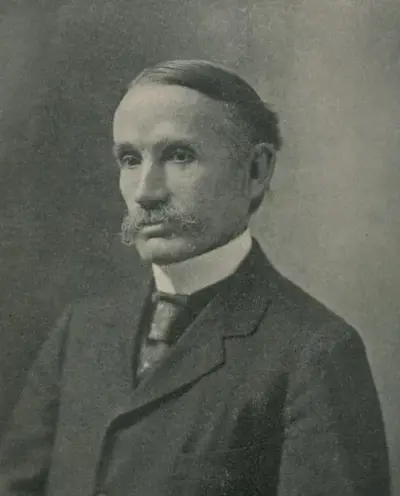
John Bates Clark was an American neoclassical economist. He was one of the pioneers of the marginalist revolution and opponent to the Institutionalist school of economics, and spent most of his career as professor at Columbia University.
