Murray Bookchin Quotes
I would not want to be in the same movement with an anarcho-syndicalist, however much I may respect and like that person. Some of my best friends are anarcho-syndicalists. I mean, I realize that we do not have a commonality, even a language, that makes it possible for us to communicate.
Bookchin, Murray. "Interview with Murray Bookchin." Reason, Oct. 1979.


Ironically, this view was also held by many of the capitalist “Captains of American Industry” who believed that all unions were revolutionist regardless of the views of the union’s membership or leadership. Even today, there are some who still equate trade unionism with communism and revolution. The majority of the unions and the left never believed that, but the extreme communists and extreme capitalists did than and some do today.

Vladimir Lenin


Roosevelt shocked the conservative members of his own party with this statement. Labor unions were not then an accepted concept in American society. Anti trust legislation and enforcement was in its infancy and companies in an industry commonly conspired as to price fixing, labor negotiations and market share allocations. TR had a scrupulous sense of fairness and equity.

He had squads of thugs that he would “rent” out to other gangsters for their enforcement activities and to unions to protect themselves from goons and intimidate non union workers. However, he would not let his men work as goons and strike busters or for companies—despite huge pay offers—to keep their workers in line, a common practice at the time.

The reason that this quotation is important is that most Americans from the 1920s on concerned with Marxism and communism in the United States, conflated Marxism with Anarchists as if Marxists were anarchists who were bent on violence. In reality, to most Marxists, anarchists were more their enemy than the capitalists. Stalin was then only 28 years old and the Russian revolution was 9 years in the future.


Bear was the classic icon of the wealthy, insensitive, powerful, prejudiced snob. He even made other capitalists somewhat sympathetic to the complaints about corporations. See {593878} and {593879}.


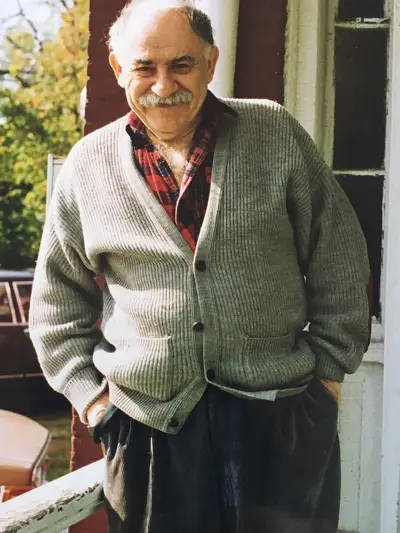
Murray Bookchin was an American anarchist, political philosopher, trade-union organizer, and educator. A pioneer in the environmental movement, Bookchin formulated and developed the theory of social ecology and urban planning, within anarchist, libertarian socialist, and ecological thought. He was the author of two dozen books covering topics in politics, philosophy, history, urban affairs, and social ecology. Among the most important were Our Synthetic Environment (1962), Post-Scarcity Anarchism (1971), The Ecology of Freedom (1982) and Urbanization Without Cities (1987). In the late 1990s, he became disenchanted with what he saw as an increasingly apolitical "lifestylism" of the contemporary anarchist movement, stopped referring to himself as an anarchist, and founded his own libertarian socialist ideology called communalism, which seeks to reconcile Marxist and anarchist thought.
