Marcel Duchamp Quotes
I would have to think about it for two or three months before I decided to do something which would have meaning. And it would have to be more than just an impression or pleasure. I would need an objective, a meaning. That is the only thing that could help me.
Cabanne, Pierre. Dialogues with Marcel Duchamp. Da Capo Press, 1987.


Rand is one of the heroes of the Conservatives. Yet this quotation is one they tend to avoid. Typically they attack liberals and Democrats and their programs and lose sight of what they would advocate for.


The delegates to the 1787 Constitutional Convention were all men with different opinions. So the intent of the Framers might mean: The intent of the individual who proposed the section, the men who spoke on that section, the majority who voted to keep it in the document. This would be hard enough if there were a transcript of the debate, but there was not. We only have the notes of Madison and a few others at different times. And even they did not know the intentions on a given issue of delegates who did not speak. George Washington, for example, never spoke for or against any particular section of the Constitution. We can infer his intentions from other writings sometimes, but what about the delegates who did not write as much or whose letters and papers have not been found or preserved? The judges who must decide on constitutionality do the best that they can, and there is ALWAYS disagreement when judges make such a judgments and render an opinion.


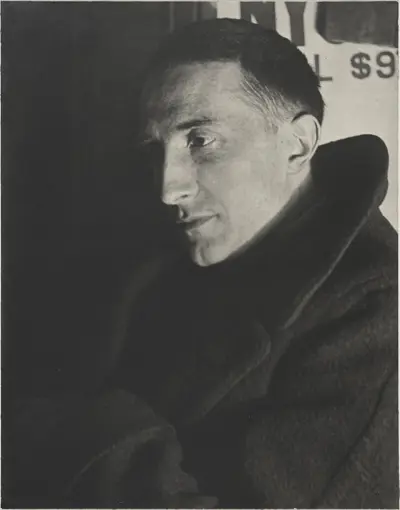
Henri-Robert-Marcel Duchamp was a French-American painter, sculptor, chess player, and writer whose work is associated with Cubism, Dada, and conceptual art. Duchamp is commonly regarded, along with Pablo Picasso and Henri Matisse, as one of the three artists who helped to define the revolutionary developments in the plastic arts in the opening decades of the 20th century, responsible for significant developments in painting and sculpture. Duchamp has had an immense impact on twentieth-century and twenty first-century art, and he had a seminal influence on the development of conceptual art. By the time of World War I he had rejected the work of many of his fellow artists (such as Henri Matisse) as "retinal" art, intended only to please the eye. Instead, Duchamp wanted to use art to serve the mind.
