Henry A. Kissinger Quotes
I will destroy them.
Henry A. Kissinger, U.S. Secretary of State (Republican), U.S. National Security Advisor, Nobel Peace Prize Laureate, Comment to Richard M. Nixon when Kissinger was told that there might be leakers on his staff
Sourced by: Eigen's Political and Historical Quotations


Although politics can get very rough, Rove took revenge for disagreement or what he perceived as disloyalty to an extreme that was new to the American experience. In one case, to punish an ex ambassador who had made public statements disagreeing with George W. Bush’s policy, Rove leaked the fact that the ambassador’s wife was a covert CIA agent, thus blowing her cover, ending her career, and endangering her life and the lives of some of her contacts. Rove pretended to be a devoted Christian for political image, his behavior towards opponents was far from Christian and his language as can be seen by this quote was not consonant with a religious person’s behavior.


The threat was if Pakistan did not cooperate with the United States after the September 11 attack. Pakistan was full of Islamic fundamentalists with strong ties to the Taliban and other terroristsw. Pakistan did cooperate as a government but the Musharraf government itself was under attack by the Islamic Fundamentalists who tried to assassinate Musharraf a number of times. Armitage has denied that he said such a thing, but he does admit a conversation where he told them that “they were with us or against us.”

It is not known whether Agamemnon ever existed other than in Greek legends. The “quotation” comes to us from Homer’s Iliad which itself was based on oral histories before and itself was oral for years before it was written. So the dialogue may be written by Homer. However, if real, was the earliest reference to genocide. The photograph is of a mask believed to be of the period but there is no certainty is was the King even though was associated with him by Heinrich Schliemann—the 19th century archeologist who found the object.


Over the years Sherman’s advocacy of Indian extermination went beyond the Sioux to all Indians.

O’Neil was one of the great ironies of the War on Terror. For years before 9-11 he had determined that al Qaeda and Osama bin Laden where major threats to America. However, the then Director of the FBI Louis Freeh had repeatedly told the White House and the national Security Council that they were not a major threat. O’Neil kept insisting that more attention be paid to al Qaeda and Osama bin Laden and was a very aggressive personality so much that his supervisors drove him out of the FBI. He then took the job of the Director of Security of the World Trade Center where he continued to warn about al Qaeda and Osama bin Laden. He was killed in the 9-11 attack when his predictions came true. The O’Neil case is yet another example of the people who were the most right in our intelligence apparatus were isolated or pushed out if they tried to command the attention of the nation’s policy makers.

Instructions to followers in revolting against the mulattoes

A number of the American soldiers refused to obey Calley's illegal order. Some helped some villagers to escape, and a helicopter pilot landed betreen Callery's men and the villagers they were shooting at, and ordered his helicopter machine gun crew to fire on the soldiers if they did back off. The soldiers stopped firing at the civillians. However, his and other reports of the massacre were covered up by the military for a few years. Mai Lai was not the only major war crime perpetrated by Americans in the Vietnam War; there had been a few others. But given the years of fighting and the many opportunities war crimes violations under orders were quite rare. The Viet Cong had many more war crimes that they perpetrated, and our South Vietnamese allies repeatedly committed war crimes against their own people.


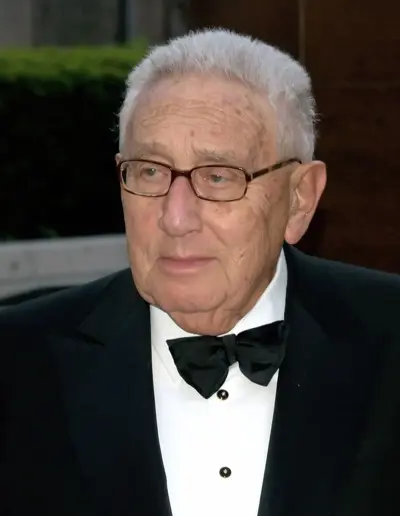
Henry Alfred Kissinger KCMG is an American politician, diplomat, and geopolitical consultant who served as United States Secretary of State and National Security Advisor under the presidential administrations of Richard Nixon and Gerald Ford. A Jewish refugee who fled Nazi Germany with his family in 1938, he became National Security Advisor in 1969 and U.S. Secretary of State in 1973. For his actions negotiating a ceasefire in Vietnam, Kissinger received the 1973 Nobel Peace Prize under controversial circumstances, with two members of the committee resigning in protest.
