Paul H. Douglas Quotes
I was just visited by a constituent of mine who runs a company that provides services that your agency might use and I would like someone to meet and tell them if there are any opportunities for them. I personally do not know the quality of their work, and I of course do not want any special favor or consideration for them. I have told them that I will only help them identify Federal opportunities but to win any work they must be the best company and the low bidder.
Typically then and now, members of Congress would have their staffs call Federal officials implying endorsement for constituent companies, and if a contract ensued would imply to the constituent that the member had something to do with it. In some cases, they would pressure the agency to award contracts to their constituents. Douglas had the highest ethical standards and was unique in that he made the calls himself so that he should personally tell the official that there should be no special treatment for his constituent and would personally tell the constituent that other than helping them find Federal business opportunities, he would not be of additional assistance.
Paul H. Douglas, 1892-1976, U. S. Senator (Democrat, IL), Telephone Call to the Associate Director of the U. S. Job Corps, 1964
Sourced by: Eigen's Political and Historical Quotations

This quotation illustrates a political phenomenon that used to be common in American politics—the spoils system where government activities, positions, contracts and grants were awarded to the supporters of the winning party and not to the opponents. In modern times government contracts were supposed to have been awarded on the basis of qualifications and price and not conditioned on political support. In this rare quotation, the secretary admitted to violating his own Department’s regulations and using politics as a criteria where existing laws prohibited that.


What was remarkable was that all the Defense Department and military witnesses agreed with Lynch on this point.

The George W. Bush administration was a throwback to an earlier era where such a spoils system was operational. Reforms had almost eliminated this type of contractor political favoritism but a culture of political corruption had developed in Congress and the Executive branch in the early 21st century that was more reminiscent of a more than a hundred years earlier. See {589738} for one of the examples that triggered the editorial.

Fogleman came out of retirement at the request of Air Force General Bernard Schriever, Commander of Air Force Systems Command, which was responsible for acquiring all missiles. He oversaw 40 percent of the Air Force budget most of which was spend on procurement contracts with companies. Schreiver wanted an experienced business man to oversee his procurement. In 1964 Foglemen volunteered to start up and train the procurement department for Sargent Shriver, President Johnson’s designee to direct the War on Poverty. 210 Job Corps Centers had to be constructed and corporations hired to operate the largest ones—all within a two year span. Fogleman faced the same problem where the Federal officials responsible for the Job Corp had very little business experience. He was very successful and persuaded Shriver and his key staff to hire a cadre of people with business experience and pay them at the high end of the Federal pay scale. The unit met the President’s deadline and obtained great prices, making exemplary use of taxpayer’s money. Fogleman retired for the third time, and after a few years the Job Corps was transferred to the Labor Department and the typical government procurement staff and norms began to operate. Forlleman and General Schreiber were unable to institutionalize Fogleman’s methods and after the General retired, the command that had been so effective for a few years, reverted to standard DOD procurement. See {634893} for a quotation of one of Fogleman’s trainees on military procurement.
_0_thumbnail_47x47.jpg "Steven Brill (born August 22, 1950) is an American lawyer and journalist-entrepreneur. Brill's most recent reporting and book is concerned with healthcare costs.")
There are 207,000 procurement personnel in the government who are required to follow the 1,600 page FAR (Federal Acquisition Regulations) guidelines and, in the case of the DoD, the 1,600+ page D-FARS overlay to the FAR covering military contracting.


He and the other commissioners of both political parties were agreed that the procurement by The State Department, USAID, and especially the Defense Department which spent the most was terrible. The even had military generals in charge of billions of dollars of procurement who did not even know the procurement laws and regulations they were supposed to obey much less the skill of good procurement.

At the turn of the century, there was a moral norm in much of the country that buying and stealing votes in elections were not moral transgressions and was acceptable in the heat of political contests.


Although England had benefitted more from the industrial revolution than most nations, the English Aristocracy and its intelligencia saw business as inherently corrupt with minimal ethical standards and almost no transparency. See {629121} for a Christian religious version of this secular quotation.


Clark, after becoming one of the richest men in America, wanted to go into National Politics, but most people hated him so he could never win elected office. At the time, Montana selected their Senators by a vote of the State Legislature. So Clark bribed enough members of the legislature to become the Senator. However, the bribery scheme became a public scandal and the Senate refused to seat him. So the legislature had another vote in the next legislative session and Clark won again, and that time no one had the evidence of the bribes. But then, more about Clark became known, and he just served the one term.


The relationship between the Embassy and the contractor was so twisted and corrupt that the contractor’s on site manager in Iraq threatened to have Richter killed if he continued to probe into the documents that would incriminate them. In the midst of a war zone where the contractor was responsible for providing armed security for the State department personnel—see the graphic—including Richter, it would have been very easy to arrange. Blackwater then arranged with the embassy to have Richter and another auditor/investigator expelled from Iraq so that they could not complete their entire investigation. The State Department began a complete investigation years later when the press discovered this memo and divulged it.


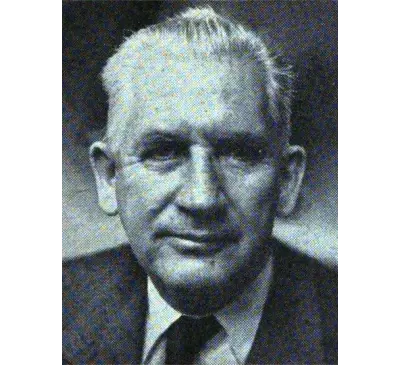
Paul Howard Douglas was an American politician and Georgist economist. A member of the Democratic Party, he served as a U.S. Senator from Illinois for eighteen years, from 1949 to 1967. During his Senate career, he was a prominent member of the liberal coalition.
