Elie Wiesel Quotes
I was involved in trying to save the Rwandan people and Sudan now. It's a mass murder. Mass murder is a terrifying word. We don't have to go further than that. Cambodia came close to, but what was it, Cambodians killing Cambodians after all. So therefore I think we should be very careful with vocabulary.
Wiesel, Elie. Interview. Academy of Achievement, 29 June 1996, Washington, D.C.


Commenting on U. S. policy on Bosnia:


Wilson was referring to the Armenian genocide that was being carried out by Turkey. Under the League of Nations treaty then executed, the League would take over Armenia and end the massacres.
The Christian Armenians, a minority in Turkey and its lands, were discriminated against like other non Muslim minorities in the Ottoman Empire. But during the Turkish War with Russia and WWI, some Armenians defected and served on the Russian side. Many Turkish citizens took revenge on Armenians by means of murder and torture. Soon, the extermination of the Armenians became the official “Young Turk” government policy. Hundreds of thousands of Armenians were killed outright, and about an equal number were “deported” to special areas. Many died of malnutrition along the forced march of Ethnic Cleansing. Others were murdered as they were deported. No one knows exactly how many Armenians were killed with estimates ranging from ½ million to 4 million. This was the first genocide of the 20th century. Modern Turkish leaders however, are in denial about the Armenian deaths. They claim that there was a war and food was scarce; the only Armenians killed, the claimed were proven Russian agents. They further claim that the Armenian behavior was in large part responsible for the forced deportations because of their lack of patriotism and unwillingness to help the Turkish authorities identify the Russian agents. Most Turks today are unaware of the Armenian Genocide as nothing is taught about the massacres in schools or other institutions. It is against the law in Turkey to even have an intellectual study of the Turkish behavior towards the Armenians, much less publish anything about it.


The two groups of Christian minorities in Turkey then were the Greeks and the Armenians. The discrimination against those minorities had been so great that many sought independence for their areas and accepted and gave assistance to Russia and other “enemies” of Turkey. The Turks, instead of distinguishing between those who aided the enemy and those that did not, assumed that all Armenians and Greeks were guilty and began a program of ethnic cleansing and organized murder of the Christians—the Armenians in particular. Unlike Germany, which accepted its guilt for the Holocaust and organized their society to prevent anything like that from ever happening again, the Turks deny the Armenian Genocide and despite clear historical evidence to the contrary, claim that the Armenian deaths were “collateral damage” resulting from the war. This quotation is poignant in that by the time, the Western powers seriously challenged the Armenian genocide, most of the Armenians had been exterminated as Talat admitted.


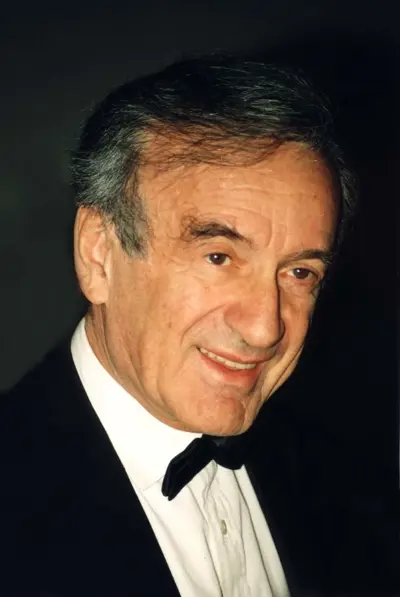
Elie Wiesel was a Romanian-born American writer, professor, political activist, Nobel laureate, and Holocaust survivor. He authored 57 books, written mostly in French and English, including Night, a work based on his experiences as a Jewish prisoner in the Auschwitz and Buchenwald concentration camps.
