Mark Twain Quotes
I was a mugwump. We, the mugwumps, a little company made up of the unenslaved of both parties, the very best men to be found in the two great parties--that was our idea of it--voted sixty thousand strong for Mr. Cleveland in New York and elected him. Our principles were high, and very definite. We were not a party; we had no candidates; we had no axes to grind. Our vote laid upon the man we cast it for no obligation of any kind. By our rule we could not ask for office; we could not accept office. When voting, it was our duty to vote for the best man, regardless of his party name. We had no other creed. Vote for the best man--that was creed enough.
Samuel Langhorne Clemens, 1835-1910
Mark Twain, Writer, Founder, Anti-Imperialist League, North American Review, December 21, 1906
Sourced by: Eigen's Political and Historical Quotations


She went on to found a centerist party when she decided that the Labour Party had gone too far to the left. See {603453} for an American view of centerists.


The all white regular Mississippi Delegation was selected in elections where Blacks were barred from voting although Blacks were in the majority in Mississippi. In addition, the regular party was advocating obstructing the Supreme Court school integration decisions and the Civil Rights Act that had just been passed. See {637616}. The insurgent group was selected in integrated elections, contained black and white delegates, and was pledged to support and obey the laws. The President could not make the decision unilaterally, but had a great deal of influence.


Everyone who is employed owes the employer some degree of loyalty and cannot give his public opinion on an issue if it differs from the candidate or party that employees him. This is why it is so important if a Democrat criticizes Democrats or a Republican criticizes Republicans.

formerly 2nd Viscount Stansgate
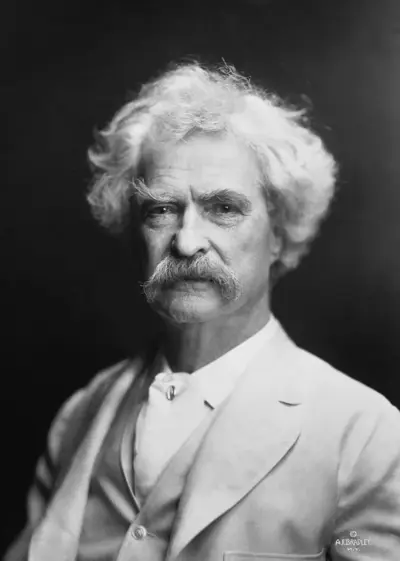
Samuel Langhorne Clemens, known by his pen name Mark Twain, was an American writer, humorist, entrepreneur, publisher, and lecturer. He was lauded as the "greatest humorist the United States has produced," and William Faulkner called him "the father of American literature". His novels include The Adventures of Tom Sawyer (1876) and its sequel, the Adventures of Huckleberry Finn (1884), the latter often called "The Great American Novel".
