Gunter Blobel Quotes
I was 8 years old in the spring of 1945 when my family fled Silesia to escape the Russian army. On our way, we passed through Dresden. A few days later, it was firebombed. The fire was so bright that night that one could read a newspaper from the light, though we were many kilometers away.
"Nobel Winner Donates Prize to Rebuild Dresden." The Associated Press, 24 Feb. 2000.


On March 9-10, 1945, over three hundred B-29 Superfortresses, loaded with 2,000 tons of incendiary bombs flew over Tokyo bombing the city in waves for 6 hours. Over 250,000 buildings were destroyed and more people killed than would be in either Hiroshima or Nagasaki which were destroyed by atomic bombs. The fact that the Japanese would not surrender even after such complete destruction of their capital and largest industrial city, was used by American leaders in assessing whether to use the atomic bomb afterwards. There were many who believed that the atomic bomb would not be enough for motivate a Japanese surrender as Japanese culture prohibited surrender. Indeed, even after the 1st atomoc bomb, the Japanese did not surrender, and after the 2nd, the war council was split 3-3 and the Emperor historically broke the tie. Even the atomic bomb might not have worked. Later generations found this resistance to surrender hard to understand but Japanese culture was amazingly strong then.


The general was replacing George S. Patton as commander of the Third Army. Patton had opposed the deNazification policy of the allies and caused a great deal of public relations difficulty for the army command and the administration, as reporters would frequently print his views. Truscott was one of Patton’s loyal assistants. The minute he took over, the press wanted to find out if his views were the same as his former boss regarding the Nazis. They were quite different. Reporters had no story.

The culture of Iraq and the Desert tribes made raiding and looting of other villages or travelers or caravans a way of life. The British occupiers were determined to put an end to it and Harris, a young officer, developed the retaliation of bombing the village of the raiders and their warlords. This appears to be the beginning of destroying of houses in the Middle East as a method of retaliation and punishment which would be adopted so well by the Israelis as a humane method and they often quoted Harris saying: “we put them to the maximum amount of inconvenience, without physical hurt, and they soon stopped their raiding and looting.”

This was her last report on the Syrian Government massacre of its own citizens in order to consolidate and maintain power. The building she and other journalists were taking shelter in was shelled by government heavy artillery and she and others were killed. The patch over her eye in the photo reflected the loss of one of her eyes when she was covering the civil war in Sri Lanka. She was struck with shrapnel. She continued her reporting despite the great risk.

After the sneak attack on Pearl Harbor, Stimson drafted the Declaration of War that President Roosevelt would ask Congress to vote for. However, there was a small but very vocal group of extreme Republican conservatives who opposed assisting England against Hitler and saw German and Italian Fascism as positive forces. They would oppose any administration declaration of war against Germany and Italy who had not yet attacked any American facilities. The President realized that German and Italy had a Mutual Defense Treaty with Japan, and when we declared war against Japan, would have to ally with Japan or reneg on their treaty. So FDR removed Germany and Italy from the Declaration and Congress just declared war against Germany. In the next days, Germany and Italy declared war against the United States, and the de facto situation was as Stimson had drafted it, but FDR had not given the right wing American Fascist sympathizers any issue to criticize the administration.

DPs were “displaced persons” -- the euphemism for people who were no longer welcome in their country of birth. Congress, made up mostly of immigrants or the children of immigrants who were poor and downtrodden, were not enthusiastic about the United States absorbing many of the world’s DPs resulting from WWII.

Although the Yugoslav casualties were horrific, they inflicted great casualties on the Germans who lost more men fighting the Yugoslavs than they lost to any other of the allies except the Russians.


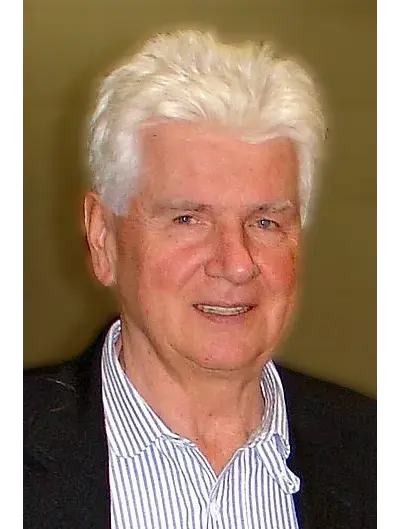
Günter Blobel was a Silesian German and American biologist and 1999 Nobel Prize laureate in Physiology for the discovery that proteins have intrinsic signals that govern their transport and localization in the cell.
