Colson Whitehead Quotes
I was 7 years old when 'Roots' was first broadcast, and my parents gathered all us kids around the TV to learn about how we got here. But it wasn't until I sat down and immersed myself in the research that I got the barest inkling of what it meant to be a slave.


In the Jim Crow era and well into the 20th century, many school books and historians, wanting to minimize the enmity between North and South, tended to a historical revisionism where the real brutal and immoral edge of slavery was minimized and slave owners were depicted as being in error by modern standards but well-meaning and paternalistic. Foner, with this famous quotation, put the lie to the false image of paternalistic slavery. By the beginning of the 21st century, there were very few serious historians who still tried to characterize slavery in the South as “paternalistic” otherwise humane. See {584014} for another of Foner’s famous quotes regarding slavery

The response was supposedly to the President’s question of the feasibility of using the Navy to remove the Negro soldiers to another land. See {590147}. This quotation’s authenticity and accuracy are challenged by many scholars. The only source is the personal reminiscences of General Butler, a politician with Presidential aspirations who had his own agenda. The nuance of wording is very critical as to whether Lincoln was trying to accomplish export or whether he was asking Butler to staff out the feasibility so that Lincoln could deal with others who had raised the issue. There is no record of his having asked anyone in the Navy to staff out such a proposal, and the Secretary of the Navy at the time, Gideon Wells kept a detailed diary. Butler’s conclusion that 150,000 people could not be transported fast enough to exceed the breeding rate of those Blacks remaining also is challenged by many, especially if the Navy and the Merchant Service were both used. This casts even more doubt on the accuracy of the quotations.

In the first part of the 18th Century, one county in Virginia became a magnet for runaway indentured servants, The more runaways settled there the more empathetic and hospitable they were to new runaway servants. The culture at the time had identified knowing your place in society and accepting it. So a runaway indentured servant had renounced their oath and contrast to serve their masters, and hence were not Christians. These renegades were armed and there was not enough political will or support for forcing the County to comply with the laws and mores of the time.


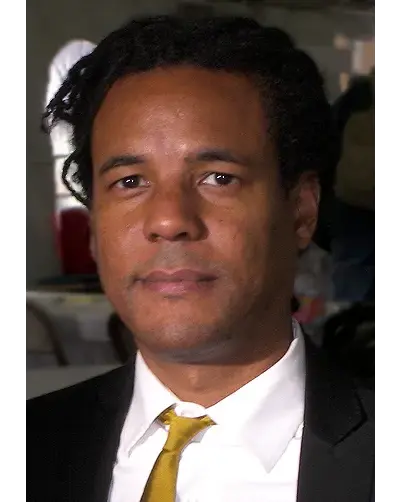
Arch Colson Chipp Whitehead is an American novelist. He is the author of seven novels, including his 1999 debut work, The Intuitionist, and The Underground Railroad (2016), for which he won the 2016 National Book Award for Fiction and the 2017 Pulitzer Prize for Fiction; he won the Pulitzer Prize for Fiction again in 2020 for The Nickel Boys. He has also published two books of non-fiction. In 2002, he received a MacArthur Fellowship ("Genius Grant").
