Hanya Yanagihara Quotes
I wanted to write about the time when science became modern, around the 1950s. Right after physicist J. Robert Oppenheimer, science started being so politicized and used as such a political weapon. When my father, who is a scientist, tells me about those years, I get a competing portrait of people who were expected to behave normally and be decent respectable members of society and who were also allowed this freedom to think in big and expansive ways. Now, when you think about people who work in labs, they're allowed to be socially inept in a very fundamental way.
Yanagihara, Hanya. "An Interview with Hanya Yanagihara." The Asian American Literary Review, vol. 4, no. 2, Fall 2013.


For a similar view from the eyes of an American, see Pearson {612242}.

Much of modern science involves non-intuitive concepts that can rarely if ever be discovered using common sense. It was hard enough for most people to accept the notion of an infinite number, but now we know that there are many infinite numbers and they are all different form one another. Darwinian thinking was contrary to most learned thought of the day, and even much public opinion today. Even Albert Einstein had to struggle to comprehend the findings of Quantum Mechanics which are very non intuitive—one object can be in two different places at the same time. Meanwhile, most people are totally unaware that the world around is does not correspond to normal human intuition and common sense. Yet these are the same and only tools that we continue to use in making decisions about our society. And the fundamental truths of yesterday, the foundation of past thinking and glory, are the naïve simplifications and errors of today and become the superstitions of tomorrow.

The security system at Los Alamos while the atomic bomb was being developed was absurd. Scientists from all over the country had to be hired quickly. Many of them had friends and relatives who had various left-wing associations; some came from Germany or had German connections. A number of the key scientists were German refugees from Hitler's persecution. The military security people, using their traditional standards, would not clear people if they had any left wing friends or associates or they came from Europe and there were no records to prove that they were not fascists or communists. Most of the refugees got out with their lives and had no records, but they were among the best scientists in the world. J Robert Oppenheimer, the scientific director, and General Leslie Groves needed the scientists as the work had to be done. Groves approved important personnel for hire pending security clearance which never came and which Groves knew would never come. Nonetheless the people were working by the time intelligence officers outside the project realized what was going on. People without clearance had some of the most sensitive jobs at Los Alamos. Not a single one of those people turned out to be a security risk or a spy. There was a spy however who had come the English scientific delegation, but the security people had cleared him. Barnett however, as Oppenheimer’s personal assistant had access to almost everything having to do with the development of the bomb. She never did get cleared for her job.

Most scientists do not have the skill or the totality of knowledge to accurately predict the effect of scientific research and learning on society. Many are not interested. Those who try to communicate with politicians and the public are usually met with indifference or suspicion. Above all, the scientific and mathematical literacy of the public is so weak, that it is impossible in much of science to even explain the science to the lay public much less explain its implications. Soddy was a bit of an idealist from a class society and he felt the upper classes should be better informed by scientists.

He was specifically discussing weapons research and development. However at that time the tendency for scientists to work in isolation in most fields of science was already reducing.


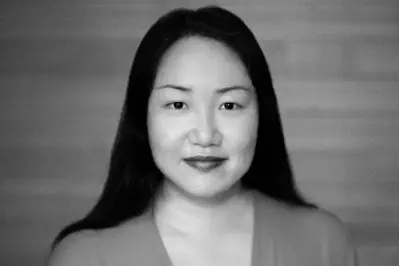
Hanya K Yanagihara is an American novelist, editor, and travel writer. She grew up in Hawaii.
