Walter Isaacson Quotes
I want to make sure we're [CNN] not used as a propaganda platform. We're entering a period in which there's a lot more reporting and video from Taliban-controlled Afghanistan. You want to make sure people understand that when they see civilian suffering there, it's in the context of a terrorist attack that caused enormous suffering in the United States.
Walter S. Isaacson, Historian, Editor and Journalist, CEO, CNN News, Memo to CNN Journalists, November 2001
Sourced by: Eigen's Political and Historical Quotations


See {583400} for the other side of the argument." Oversees and sets policy for the Voice of America


The Pakistani Government at the time and for most of the history of that nation did not have much control over the military, and regardless of what agreements the civilian government might have made, the military did not wanted to curry favor with as many Islamic radical terrorist groups as possible even though they even killed Muslims of Pakistan. They would not send the military into Northern Pakistan (Waziristan) to eliminate the Taliban sanctuaries or offend their tribal "hosts" as they were so paranoid about India that they wanted the terrorists as allies.
In modern times, there have been many incidents of members of the press not supporting the current war effort. Sometimes, it is the greed to get a story, and other times, it is to advocate an alternate strategy. Most often it is a belief that in democracy, only a knowledgeable public can govern the government. The administration or general cannot be relied upon to provide accurate information. Many think The Vietnam War started this problem, but it has been ongoing ever since the Revolution. In the War of 1812, with many Americans dying fighting, other Americans were critiquing the war infuriating the military and the President. Similarly, in all other wars including the Civil War. The relationship between Grant and the Press was as vitriolic as that of the Vietnam War. The war where there was the least conflict between the military and the press was WWII where press were given total access to the front lines without the controls that developed later in the Iraq War.

The Security Counsel was meeting it the Situation room at the White House


The Libertarians were major opponents of President George W. Bush’s Faith-Based Initiative.


This statement is quoted by many critics of the agency who ask if the threat is so easy and ubiquitous, why have there been so few attacks?

The Taliban terrorists would try and kill, kidnap and hold people for ransom following a Muslim tradition dating back to the Barbary Pirates. While there is always pressure to negotiate to alleviate the immediate situation, the negotiation is in and of itself, a reward for the terrorism. Hence the general’s rigid view.

Russert was so angry at the Sept. 11 attack that he felt he could not maintain objectivity in reporting regarding what America’s response ought to be. Like Pearl Harbor, almost all Americans were outraged. There were probably few American journalists who did not feel anger, but with Russert’s high standards of journalistic integrity he worried about it more and expressed his concern. Ironically, in the aftermath of Sept. 11, the American press & media tended not to examine administration responses with their normal cynicism and suspicion. At the time, George W, Bush, one of America’s poorest Presidents was in office, and before the media and the public looked into all the administration’s actions, the United States had gotten into what turned out to be a series of foreign policy and military quagmires, and had given $ billions worth of contracts to companies associated with the Vice President, the President’s family and others. Much of the money was never found or justified.

He had been responsible for the violent deaths of thousands of people, mostly innocent civilians in his attempt to establish an independent nation of “Kurdistan.” His position is that with technology and the media, violence and terrorism are no longer necessary for a dissident political independence movement to succeed. However, he was found guilty for his past violence and was jailed for life. The PKK continued its terrorism. See {620143}.
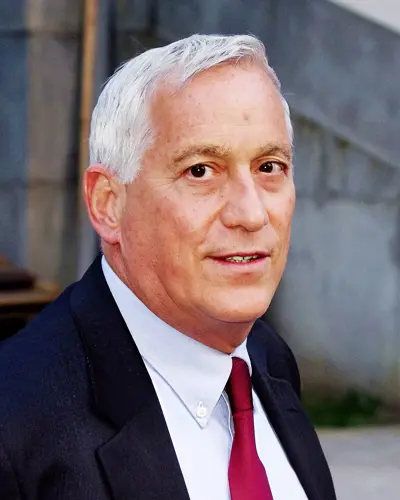
Walter Isaacson is an American author, journalist, and professor. He has been the President and CEO of the Aspen Institute, a nonpartisan policy studies organization based in Washington, D.C., the chair and CEO of CNN, and the editor of Time.
