Richard Nixon Quotes
I want a Goddamn strong statement on marijuana, I mean one that just tears the ass out of them. You know, its a funny thing, every one of the bastards that are out for legalizing marijuana is Jewish.
Nixon, Richard. Conversation with H.R. Haldeman. 26 May 1971. White House Tapes, Oval Office 505-4. Richard Nixon Presidential Library and Museum.

Although only a minority of Americans advocated legalization of Marijuana at the time, Nixon brought his notorious anti-Semitic point of view to bear on a situation where the overwhelming majority of Marijuana legalizers were Christian. There were Jews as well – in particular some prominent Jews such as Nobel Prize-Winning Economist Milton Friedman who recommended against marijuana use, but argued against government making it illegal. This was a position held by most Libertarians, many liberals, and many conservatives like Friedman.


Marijuana was and still is a health and social problem in that people who tend to use it---especially young people---tend not to focus on their friendships, their work and study obligations, their own development and welfare. However it is nowhere near the degree of deleterious problems of alcohol and other drugs like heroin, cocaine, and methamphetamine. There is no record of anyone dying from an over dose or marijuana while alcohol and other drugs kill hundreds if not thousands a year. But none of those health emergencies compare with the flu which each year kills over 20,000 Americans who do not get inoculations or highway crashes which kill about 50,000. Yet Nixon did not characterize these as “national emergencies.”

This is a very important quotation because it is an excellent example of the statement of the logic that advocates of racial profiling use. Wording may be different but the essence of the argument is always the same. The problem with the argument is twofold. First even if the statistical predictability is true, such statistical correlations were known by the Founding Fathers who nevertheless believed that it was better for the nation for the Government to follow due process and not base decisions on officials views of statistical tendencies regardless of how valid. However, even the statistics application is flawed. The problem is that there are many statistical relationships in our complex society. The vast majority of the use of racial profiling tends to only use those relationships which tend to reinforce the discriminatory biases. For example, the vast majority and proportion of the Americans who embezzle money are white males who have a college education. Yet there are few law enforcement officials who would say that we should pick white males with college emblems on their windshield, out and stop them as they might have stolen checks, business forms or other items associated with embezzlement. But those same people will advocate stopping Black males on highways under the likelihood that they are more likely to have illicit drugs. So if society profiled on EVERY characteristic that statistically related to crime, it would not be as unfair as when society picks and chooses those characteristics as this is where racism or other prejudice come into play. However, it is NEVER a good idea because it is so inefficient as a law enforcement method. Even though people of Irish extraction tend to be alcoholics more than other groups, once you start picking up Irish people to stop impaired driving, you find that most Irish are NOT alcoholics. Last there is usually huge variability within any ethnic or other group. Native Americans have an alcoholism succeptability that is even greater than the Irish. However, if one looks at each of the many Indian Reservations in Indian Country (Oklahoma), we find some reservations where almost every adult is an alcoholic and other reservations where there is no alcoholism at all. For the power of the state to generalize, that power is brought to bear on those Indians who would not be likely to be drunk as those which are.


The DEA is the Drug Enforcement Administration.


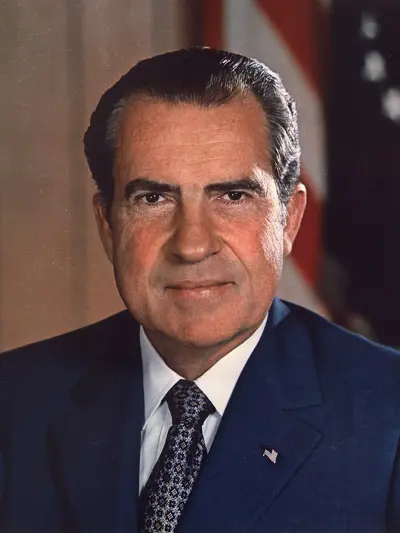
Richard Milhous Nixon was the 37th president of the United States, serving from 1969 to 1974. A member of the Republican Party, Nixon previously served as the 36th vice president from 1953 to 1961, having risen to national prominence as a representative and senator from California. After five years in the White House that saw the conclusion to the U.S. involvement in the Vietnam War, détente with the Soviet Union and China, and the establishment of the Environmental Protection Agency, he became the only president to resign from the office, following the Watergate scandal.
