Hesham Qandil Quotes
I visited the compound of the American embassy and talked to the police and the people and encouraged them, and I told them to take the proper measure and apply the law against the people who are attacking them and attacking the buildings.
Qandil, Hesham. Interview. CNN, Cable News Network, 13 Sept. 2012.


In the 2004 Iraq war, some accused the United States and Britain of failing to perform this obligation. However, in those instances where they did, others claimed the right of resistance including bombing their own co-religionists and fellow citizens. Likewise, many of the same forces that castigated the allies for not ensuring public order and safety often also castigated Israel for enforcing public order and safety in the West Bank and Gaza.


This was meant as a criticism of Webster, but must people saw it as a compliment. What Clarridge and other old hands at the CIA could never get straight was that they were supposed to break the other countries’ laws but not the laws of the United States. They were supposed to lie to other countries, but not to our President and Congress. This has been a constant problem for United States intelligence agencies. Some scholars of espionage believe that a good spy or spy master lies so often that it is part of his nature to do so as well as break laws. Psychologically it is difficult for them not to lie to anyone and they have little respect for laws. Webster fired Clarridge when Webster reformed the CIA but in the process he alienated most of the “veterans”.


While not all the indictments of the International Criminal Court were against Africans the majority were. Some African leaders thought that a double standard was being used against them. Banda’ observed that African unity was made extremely difficult as several heads of African states were indicted war criminals, and under the Rome Treaty which had been signed by most African nations obligated them to arrest indicted war criminals who were on their soil. So the African states could not hold a meeting of all African leaders without the host country being in the dilemma of whether or not to arrest them. In reality, in the decades leading up to this quotation, most of the worst atrocities did occur in Africa. The Presidents of the Sudan and Kenya were both indicted war criminals as well as some other officials and revolutionary group leaders. At the time the United States had not ratified the Treaty of Rome and this was not the best example for the Africans. However they had ratified it.


In the early 18th century, the succession to the Scottish and English Crowns was unclear. As a safety valve and check, this clause was adopted by the Scottish Parliament. This was one of the most radical and anti monarchy laws ever passed. It took the unilateral power of making war and peace from the king & established the principle of ratification of ALL treaties. The law did not last long. It was nullified by the Union between England & Scotland (1707), and the English Parliament specifically repealed the clause in the “Repeal of Certain Scotch Acts of 1707”. This clause, which only remained in force for 3 years, had a profound effect on the modern democracies. The American founding fathers were totally familiar with the recent English history & this law. So the American’s at the Constitutional Convention of 1787, built the principle into the new Constitution giving the Congress the power to Declare War and the Senate to ratify treaties as a check against Presidential power.
_0_thumbnail_47x47.jpg)
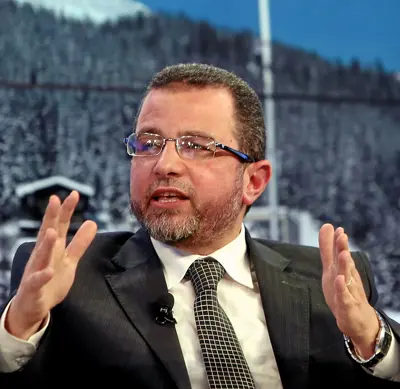
Hesham Mohamed Qandil (also spelled: Hisham Kandil; Arabic: هشام محمد قنديل pronounced [heˈʃæːm mæˈħæmmæd ʔænˈdiːl]) is an Egyptian engineer and civil servant who was Prime Minister of Egypt from 2012 to 2013. Qandil was appointed as Prime Minister by President Mohamed Morsi on 24 July 2012 and sworn in on 2 August 2012. Qandil previously served as Minister of Water Resources and Irrigation from 2011 to 2012.
