Peter Agre Quotes
I think there's nothing about evolution in the Bible; I think this is a statement of religious insecurity. But people have their beliefs.
Agre, Peter. Interview. Science Friday, National Public Radio, 2005.


Conflict between religion and evolution does not exist in most churches. There are exceptions of some orthodox Jews, fundamentalist Christians and Muslims. However, in this case the highest prelate of the American Episcopal Church not only sees no conflict but urges that evolution be taught in schools.

In 1877 Wasburn was dropped from the List of Ministers by the Unitarian Church. He had become very critical of organized and orthodox religion of all kinds. He felt that literal interpretations of the Bible harmed religions as it made a mockery of God to claim His truths were the anachronistic and demonstrable falsehoods of the Book of Genesis. Today most Christians and Jews do not take the Old Testament Literally and in this sense Washburn was one of the early religious reformers of America. There is still a significant number of fundamentalist Christians and orthodox Jews who still believe in the literal truth of everything in the Bible.

This was not only the case in 1852, but also true 150 years later. The only difference is that there is much more proof of Evolution, and there is a much smaller proportion of the population that questions Evolution as the fundamental mechanism by which all species have developed.
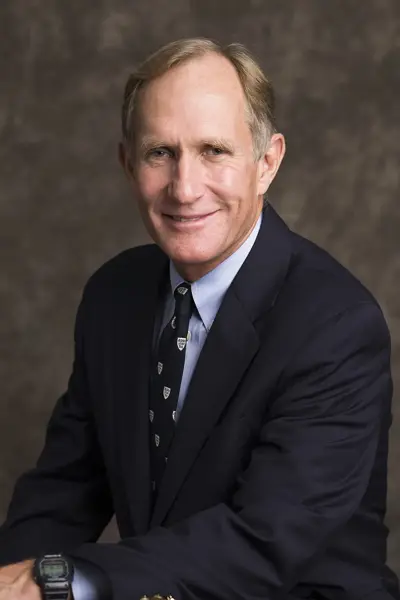
Peter Agre /ˈɑːɡriː/ is an American physician, Nobel Laureate, and molecular biologist, Bloomberg Distinguished Professor at the Johns Hopkins Bloomberg School of Public Health and Johns Hopkins School of Medicine, and director of the Johns Hopkins Malaria Research Institute. In 2003, Agre and Roderick MacKinnon shared the 2003 Nobel Prize in Chemistry for "discoveries concerning channels in cell membranes." Agre was recognized for his discovery of aquaporin water channels. Aquaporins are water-channel proteins that move water molecules through the cell membrane. In 2009, Agre was elected president of the American Association for the Advancement of Science (AAAS) and became active in science diplomacy.
