Hugh Masekela Quotes
I think the most difficult thing that has had to happen in South Africa for the previously disadvantaged communities is they had to reconcile that the oppressor has been enriched and the establishment is now making five or 10 times more profit than they were during the time the economic embargo was on them.
Masekela, Hugh. Interview. The Independent, Independent Digital News & Media, 2011.


Abraham Lincoln in his famous eulogy to Clay in Springfield, IL, used this quotation.


This was one of the blackest marks on the Reagan Presidency. The Congress had voted sanctions against the racist, dictatorial government of South Africa as many other countries had done. However Reagan opposed the sanctions, although he claimed that he opposed apartheid and the general human rights denial of South Africa, he opposed doing anything about it that might change the situation. To many this was like saying one is opposed to marital rape but refusing to pass legislation to make it illegal. Congress, then passed the sanctions bill overriding the President’s veto.

All of Europe and the US and the other industrial democracies wanted South Africa to end apartheid and allow majority rule. Many had imposed strong economic sanctions upon the Apartheid nation. Botha, and most of the other Afrikaners, believed that Nelson Mandala and the Blacks were all communists or under the control of the communists, and that ending apartheid would turn South Africa into a Communist Country. Of course that was a paranoid fantasy as all movements for racial or ethnic equality are accused of being communists just as in the American South. When majority rule finally came to South Africa, it showed just how wrong the Afrikaners were as there has been a small communist movement in South Africa which has like the Italian communists functioned but had very little power or influence.
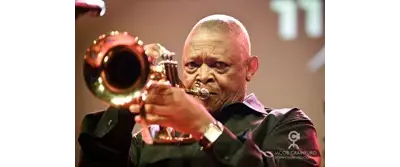
Hugh Ramapolo Masekela was a South African trumpeter, flugelhornist, cornetist, singer and composer who was described as "the father of South African jazz". Masekela was known for his jazz compositions and for writing well-known anti-apartheid songs such as "Soweto Blues" and "Bring Him Back Home". He also had a number-one US pop hit in 1968 with his version of "Grazing in the Grass".
