Judith Butler Quotes
I think maybe the destructive pleasure got turned into the destructive pleasure of war (something we see still in the images of US soldiers urinating on the dead bodies of Taliban soldiers). Something of the pleasure in destruction gets unleashed, and then becomes part of war effort rationalised first as revenge (or justice defined as revenge). But then it takes new forms, as we see now.
Butler, Judith, and Athena Athanasiou. Dispossession: The Performative in the Political. Polity Press, 2013.


There is disagreement amongst historians as to whether or not the atrocities attributed to the retreating British troops were actually true. There are two other possibilities. First, this report was made only a week after the battle itself and less than that since the alleged atrocities would take place as the British retreated. There were certainly all kinds of rumors with information passed from person to person with no modern means of documentation. The Provisional Congress may have sincerely thought that all the events occurred but they may have been the result of inadvertent exaggeration. Then there is the possibility that in order to fire up the Americans to join the war, some or all of the atrocity reports were deliberately fabricated. It would only take two or three delegates to agree on such a strategy and they could “confirm” each other’s accounts of the happenings. Of course it might all be true. However, as the British retreated to Boston where they had reinforcements, they did not have a lot of time for malicious atrocities. All along the route, Minutemen, local farmers and townspeople continued the attack against the British. By the time the British soldiers reached Boston, 73 British solders were dead and 174 more were wounded. In war truth does not have the respect that it usually does. See {626632}.

Duklja was the capital of the Empire of Serbia in the 12th century when Serbia controlled the entire region.

There were other factors which Stalin did not mention. There was a major factor of revenge and retaliation. The Germans had killed 22 million Russians (many murdered deliberately), and forced millions of others into slave labor. They had looted everything of value, artistically or commercially from Russian, homes, churches and other buildings. Many of the Russian officers believed that treatment of the Germans was only just given the barbaric behavior of the Germans and applauded by most of the German population.


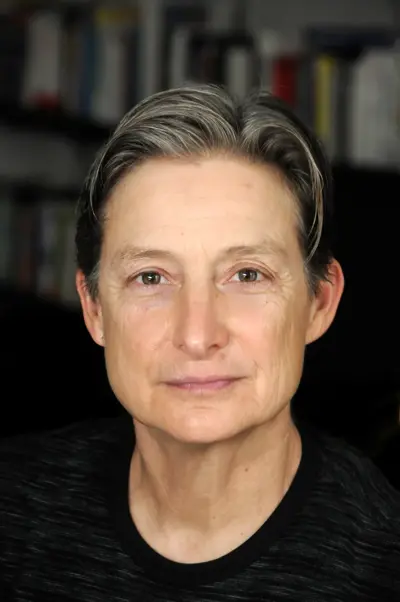
Judith Pamela Butler is an American philosopher and gender theorist whose work has influenced political philosophy, ethics, and the fields of third-wave feminist, queer, and literary theory. In 1993, Butler began teaching at the University of California, Berkeley, where they have served, beginning in 1998, as the Maxine Elliot Professor in the Department of Comparative Literature and the Program of Critical Theory. They are also the Hannah Arendt Chair at the European Graduate School.
