Ruben Blades Quotes
I think being born in Panama was a blessing because Panama is a port city. It's a really - the mentality is that - I remember that of admitting things in. You know, ports, ideas come in and out all the time.
Blades, Rubén. Interview. Latin Music USA, WGBH Educational Foundation, 2009.


In revolutionary America, not only were the colonists divided into revolutionists and loyalists to Britain, but among the revolutionists, there was no uniformity of manners, ideas, norms, beliefs or any other element of politics and unity. The great challenge to America and one of its great strengths is its diversity which is not a consequence of recent immigration, but has been a characteristic of the American body politic even in the Revolutionary War. Even English was not spoken by everyone as there were French, German, Scandinavian and other immigrants who had settled in the frontier and rarely came into contact with people other than those of their own family and community. The notion of a specific American culture to which which some today believe that we should return, never existed to begin with.


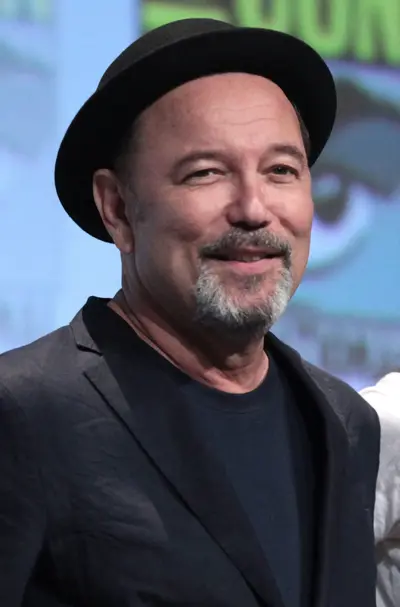
Rubén Blades Bellido de Luna, known professionally as Rubén Blades (Spanish: [ruˈβem ˈblaðes], but [- ˈbledz] in Panama and within the family), is a Panamanian musician, singer, composer, actor, activist, and politician, performing musically most often in the salsa, and Latin jazz genres. As a songwriter, Blades brought the lyrical sophistication of Central American nueva canción and Cuban nueva trova as well as experimental tempos and politically inspired Son Cubano salsa to his music, creating "thinking persons' (salsa) dance music". Blades has written dozens of hit songs, including "Pedro Navaja" and "El Cantante" (which became Héctor Lavoe's signature song). He has won nine Grammy Awards out of seventeen nominations and five Latin Grammy Awards.
