C. V. Raman Quotes
I strongly believe that fundamental science cannot be driven by instructional, industrial, governmental or military pressures. This was the reason why I decided, as far as possible, not to accept money from the government.
Venkataraman, G. Journey into Light: Life and Science of C. V. Raman. Indian Academy of Sciences, 1988, p. 513.

In many nations, including the United States on occasion, governments have made laws as to what is valid science and what is not. Tennessee and other Bible-Belt States have and still do on occasion. The latest being Evolution, which even in the beginning of the 21st century, Kansas determined that it was not proven science, when it is as proven as any science has ever gotten.


The Scientific Project that developed the Atomic Bomb. Oppenheimer was the great physicist who directed the successful development of the atomic bomb so as to build the weapon before Hitler did in World War II. However, as the technology evolved, he had doubts as to the wisdom of creating even more powerful hydrogen weapons. His viewpoint was hurting the administration’s policy of rapid unlimited nuclear weapons development, and he was the victim of a character assassination whereby his security clearance was withdrawn. The “father” of the atomic bomb was the first American casualty of atomic weapons development.


She was referring to scientists who might have personal moral judgments regarding a scientific issue like embryos, stem cells, and abortion or animal experiments that are different from that of the government at the time, might have their job threatened if they refused to personally perform a procedure that was offensive to them.

The justice was ruling that copyright did not preclude fair use by others for educational and scientific purposes.


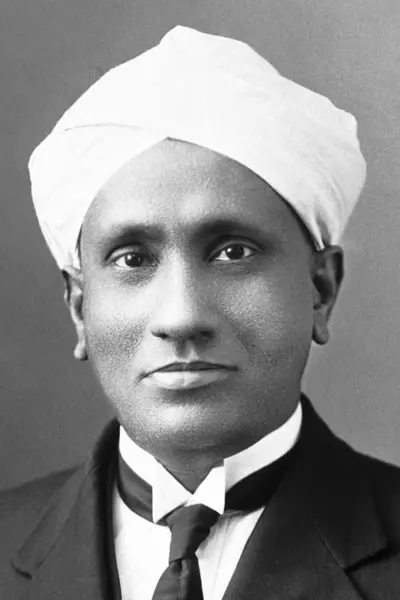
Sir Chandrasekhara Venkata Raman was an Indian physicist known mainly for his work in the field of light scattering. With his student K. S. Krishnan, he discovered that when light traverses a transparent material, some of the deflected light changes wavelength and amplitude. This phenomenon was a new type of scattering of light and was subsequently termed as the Raman effect (Raman scattering). Raman won the 1930 Nobel Prize in Physics and was the first Asian person to receive a Nobel Prize in any branch of science.
