Harry F. Byrd Quotes
I stand for strict economy in governmental affairs.
Byrd, Harry F. Campaign announcement. The Winchester Star, 1915. Quoted in Heinemann, Ronald L., Harry Byrd of Virginia, University Press of Virginia, 1996, p. 13.


In 1964 the treasury secretary asked the president how to sell the proposed budget to Congress:

This is a particularly interesting historical quotation. It shows that when FDR was first elected, he had a classic view of deficit spending. However, above all, Roosevelt was a pragmatist and not an ideologue. Faced with the Great Depression that was not getting much better, Roosevelt turned around, changed his mind and policy about deficits and embarked on the “pump priming” approach of injecting substantial Federal spending into the economy and accepting the deficits in order to improve the situation which had been stagnant. FDR’s new policy staved off total disaster, but few remember that his great success was a total reversal of his earlier views.

Perry was one of a number of politicians who became opposed to deficit spending, and claimed that the public was not interested in the various projects. However, whenever any of these politicians proposed projects or programs to cut, there would be many citizens who would object vehemently. It was precicely because there was a constituency supporting all the government programs that politicians found it so hard to keep spending under control. Indeed, when others suggested terminating spending on programs and projects Perry liked, he objected as strenuously as most others.


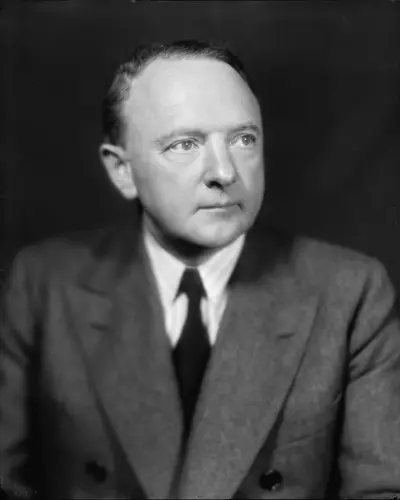
Harry Flood Byrd Sr. was an American newspaper publisher, politician, and leader of the Democratic Party in Virginia for four decades as head of a political faction that became known as the Byrd Organization. Byrd served as Virginia's governor from 1926 until 1930, then represented it as a United States Senator from 1933 until 1965. He came to lead the "conservative coalition" in the United States Senate, and opposed President Franklin D. Roosevelt, largely blocking most liberal legislation after 1937. His son Harry Jr. succeeded him as U.S. Senator, but ran as an Independent following the decline of the Byrd Organization.
