Blythe Masters Quotes
I spent my whole career thinking about risk, markets, infrastructure, and regulation. I had seen the financial crisis unfold, and I had seen the credit derivatives market get operationally ahead of itself, which resulted in systemic risk counterparty exposures. I began to believe that distributed ledgers had the capability to tackle that problem.
Robinson, Edward, and Matthew Leising. "Blythe Masters Tells Banks the Blockchain Changes Everything." Bloomberg Markets, 1 Sept. 2015.


He was referring to Fannie Mae, the government-created. private mortage guarantee company. It was heavily regulated, and in general it met the regulatory requirements. However, the requirements were insufficient, and in the 2008 Meltdown and the Great Recession that followed, Fannie Mae itself was in such bad financial condition, that the Federal Government had bail them out or have the entire home mortgage industry fall apart.

U. S. Treasury Secretary Larry Summers called Rajan a “Luddite” for this view, but what Rajan observed and predicted was exactly what happened in the Meltdown of 2008 which led to the Great Recession. Rajan was one of the few economists to call this right. Several, invested their own money assuming a crash and made billions. Most, like Summers and the Federal Reserve Chairmen in retrospect admitted that they missed the signs and didn’t connect the dots. See {637168}, {637987}, and {620038}

She had warned about the unregulated derivatives 10 years earlier, but to no avail. See {637987}. Then when she had been proven prescient in the Meltdown of 2008, Congress was more interested in how she thought they could prevent future problems with derivatives. Some were adopted but not all. The financial institutions claimed that they needed derivatives to hedge positions and hence “stabilize” the system. Of the members of Congress who voted on this issue, almost none understood derivatives and credit default swaps were and how they worked. But some were sure they were bad, and others were sure that they were necessary for stability. Derivatives can, and did, get so complicated that the people who originally created them sometimes cannot tell whether they are at risk or not. Even computer cannot calculate the value and risks of these instruments because the values and risks depend on what happens to other companies or instruments which themselves have derivatives insuring them. See {620038} for a good description of the difficulty.


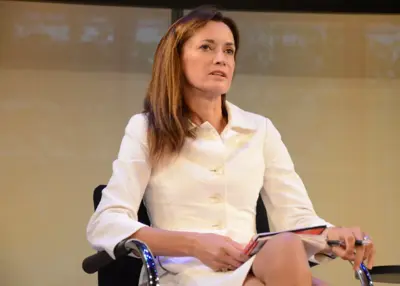
Blythe Masters is a British former executive at JPMorgan Chase. She is the former CEO of Digital Asset Holdings, a financial technology firm developing distributed ledger technology for wholesale financial services. Masters is widely credited as the creator of the credit default swap as a financial instrument. She is also Chairman of the Governing Board of the Linux Foundation’s open source Hyperledger Project, member of the International Advisory Board of Santander Group, and Advisory Board Member of the US Chamber of Digital Commerce.
