Nassim Nicholas Taleb Quotes
I've been telling anyone willing to listen that banks have a tendency to sit on time bombs while convincing themselves that they are conservative and nonvolatile.
Taleb, Nassim Nicholas. The Black Swan: The Impact of the Highly Improbable. Random House, 2007.


Actually, even with higher capital requirements, the banks could take more risk but then they would have to risk their own money rather than their depositors’ funds. The depositors funds are at risk but if the risk pays off, only the bank and their executives profit. The depositors get nothing. If the bank loses their risky gamble, the major loss will be covered by the Government via a bail out and/or Federal Deposit Insurance money that protects most depositors. For the Banks, its “heads we win; tails the government loses”.

He was referring to Fannie Mae, the government-created. private mortage guarantee company. It was heavily regulated, and in general it met the regulatory requirements. However, the requirements were insufficient, and in the 2008 Meltdown and the Great Recession that followed, Fannie Mae itself was in such bad financial condition, that the Federal Government had bail them out or have the entire home mortgage industry fall apart.

U. S. Treasury Secretary Larry Summers called Rajan a “Luddite” for this view, but what Rajan observed and predicted was exactly what happened in the Meltdown of 2008 which led to the Great Recession. Rajan was one of the few economists to call this right. Several, invested their own money assuming a crash and made billions. Most, like Summers and the Federal Reserve Chairmen in retrospect admitted that they missed the signs and didn’t connect the dots. See {637168}, {637987}, and {620038}

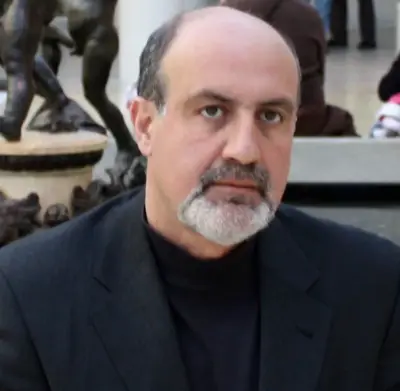
Nassim Nicholas Taleb (/ˈtɑːləb/; alternatively Nessim or Nissim; born 1960) is a Lebanese-American essayist, scholar, mathematical statistician, and former option trader and risk analyst, whose work concerns problems of randomness, probability, and uncertainty. His 2007 book The Black Swan has been described by The Sunday Times as one of the twelve most influential books since World War II.
