Paul Klee Quotes
I must begin, not with hypothesis, but with specific instances, no matter how minute.
Klee, Paul. The Diaries of Paul Klee, 1898-1918. Edited by Felix Klee, University of California Press, 1964, p. 125.


This quotation illustrates and important aspect of science. Specifically, that theory, something ephemeral and impractical to the layman, has immense practical power in developing great scientific and technological breakthroughs. The result of this breakthrough was large lenses that could make lights more powerful and make lighthouses much more safe. Even the atomic bomb was really developed from theory and then engineered for practical use.


This is a very important quotation because it illustrates a large difference between ideological politics and science and scientific thinking. As an example, one of the must fundamental rules of conservative Republicans at the beginning of the 21st century was that “If taxes are raised, the economic consequences will be that growth and development of jobs will slow. In the last 6 years of Ronald Reagan’s administration, he raised taxes. Yet the economy grew. In the early years of the Clinton administration income tax rates were increased, and America had the greatest growth rate in modern times as well as a balanced budget with a surplus. There have been a few other examples of “exceptions” to this “rule.” There were also many examples where the rule held. However, from a scientific point of view, with the FIRST exception the rule (principle) was invalidated. Yet Republicans continue to use and quote the rule which is clearly untrue. The scientist would likely have amended the rule to reflect reality: “In many cases, raising income tax rates will often slow economic growth.” However, politicians commonly state principles and rules despite the fact that there are exceptions. As for the statement “the exception proves the rule” there are few as absurd. One exception means no valid rule.


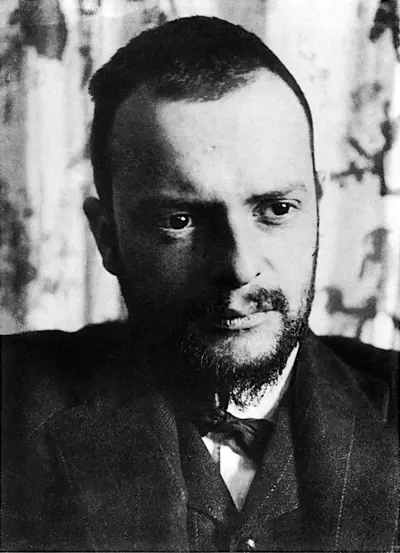
Paul Klee was a Swiss-born German artist. His highly individual style was influenced by movements in art that included expressionism, cubism, and surrealism. Klee was a natural draftsman who experimented with and eventually deeply explored color theory, writing about it extensively; his lectures Writings on Form and Design Theory (Schriften zur Form und Gestaltungslehre), published in English as the Paul Klee Notebooks, are held to be as important for modern art as Leonardo da Vinci's A Treatise on Painting for the Renaissance. He and his colleague, Russian painter Wassily Kandinsky, both taught at the Bauhaus school of art, design and architecture in Germany. His works reflect his dry humor and his sometimes childlike perspective, his personal moods and beliefs, and his musicality.
