Kary Mullis Quotes
You make observations, write theories to fit them, try experiments to disprove the theories and, if you can't, you've got something.
Mullis, Kary. Dancing Naked in the Mind Field. Pantheon Books, 1998.


This quotation illustrates and important aspect of science. Specifically, that theory, something ephemeral and impractical to the layman, has immense practical power in developing great scientific and technological breakthroughs. The result of this breakthrough was large lenses that could make lights more powerful and make lighthouses much more safe. Even the atomic bomb was really developed from theory and then engineered for practical use.


A null hypothesis is a statistical scientific term that a researcher assumes and uses to compare other things to. If there are no significant, found differences, the null hypothesis is not rejected. If significant differences are found, then the null hypothesis (yesterday's truth) is then rejected. In science, no one has been right for 400 years since Aristotle. Truth is never eternal. It is continuously subjected to testing and conformation and history has shown that with new instruments, new techniques and new other findings to work from, sooner or later what we think is true today turns out to not quite be so. Often it is not completely wrong, but the old "truth" turns out to be not so in all cases or situations. For example, the mechanics of Isaac Newton was assumed for a few centuries to be true. Then along came Albert Einstein and he showed that Newton was right except when objects were traveling at very high speeds when Relativity explained them. And in less than one century, we realized that Einstein's Relativity explained everything except very small particles which are better explained by Quantum Mechanics. This process of will almost certainly continue.


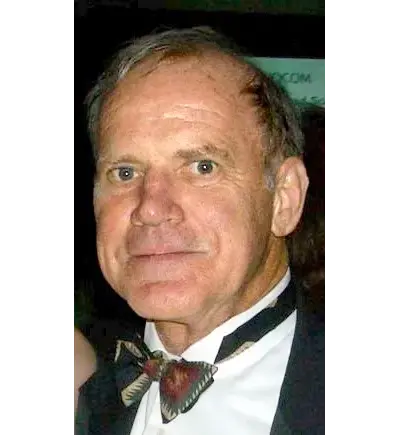
Kary Banks Mullis was an American biochemist. In recognition of his invention of the polymerase chain reaction (PCR) technique, he shared the 1993 Nobel Prize in Chemistry with Michael Smith and was awarded the Japan Prize in the same year. His invention became a central technique in biochemistry and molecular biology, described by The New York Times as "highly original and significant, virtually dividing biology into the two epochs of before PCR and after PCR."
