Themistocles Quotes
I may not know how to tune a lyre, but I know all that I need to know to make a city great and free.
Themistocles was not of an upper class family and did not have many of the typical social graces of the time. However he did not worry about that and became the victorious admiral over the Persians and Archon of Athens which made him the leader of all the Greeks. He however grew unpopular over time and was voted to be banished which he was.
Themistocles, ~525 BC-460 BC, Athenian Admiral and Archon (Leader) of Athens, Quoted on PBS Engineering of Ancient Greece, October 16, 2006
Sourced by: Eigen's Political and Historical Quotations


Harding was arguing for party government. He may or may not have been right, but he was one of the weaker administers that held the American presidency. In addition he was not a particularly hard worker, and was more than willing to share any burdens.


John Purroy Mitchell, 1879–1918, was an abject failure as a mayor. He only lasted one term and almost had a popular revolution against him. He had no ability to connect with the average voter and cared little for any but the upper classes, many of whom lived on 5th Avenue. 1st Avenue in contrast was full of overcrowded slums and the poorest people in the city. His repugnance for common people was ironic because he was the grandson of the great Irish nationalist, John Mitchel, 1815-1874, Irish Journalist & Founder of United Irishman and Founder of The Irish Confederation. He was one of the great heroes of the common people who was jailed in Australia by the English. He escaped and came to New York City.


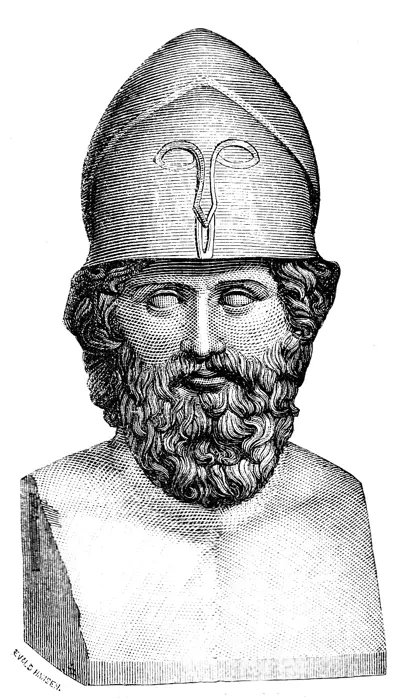
Themistocles (/θəˈmɪstəkliːz/; Greek: Θεμιστοκλῆς [tʰemistoklɛ̂ːs]; "Glory of the Law"; c. 524–459 BC) was an Athenian politician and general. He was one of a new breed of non-aristocratic politicians who rose to prominence in the early years of the Athenian democracy. As a politician, Themistocles was a populist, having the support of lower-class Athenians, and generally being at odds with the Athenian nobility. Elected archon in 493 BC, he convinced the polis to increase the naval power of Athens, a recurring theme in his political career. During the first Persian invasion of Greece he fought at the Battle of Marathon (490 BC) and was possibly one of the ten Athenian strategoi (generals) in that battle.
