John C. Calhoun Quotes
I know of but one principle to make a nation great … Protectionism and patriotism are reciprocal. This is the road that all great nations have trod.
John C. Calhoun, 1782-1850, Vice President of the United States (Democrat, SC), U. S. Congressman & Senator (Democrat, SC), Debate, House of Representatives, December 12, 1811
Sourced by: Eigen's Political and Historical Quotations


The Country was still in the Depression.


Earlier, Jefferson was opposed to manufacturing in America as factories were a social blight in Europe which he wanted to keep out of the United States. He felt that we could import whatever we needed from Europe and not have the evils of industrialization. However, with the War of 1812, the Barbary Pirates and his mellowing when no longer President, and his willingness to change his positions as he learned more, he issued this letter. See another the following year: {615634}. His was considered such an important change of position—today we would accuse him of a flip flop— that other journals and periodicals reprinted the letter and commented upon his change. Despite his changed position, most Americans believe that Jefferson was opposed to manufacturing and industrialization for his entire life—not just the first part.

During Theodore Roosevelt's administration there was a movement for tariff reform. The Speaker advised against any change, and the President finally accepted his view:


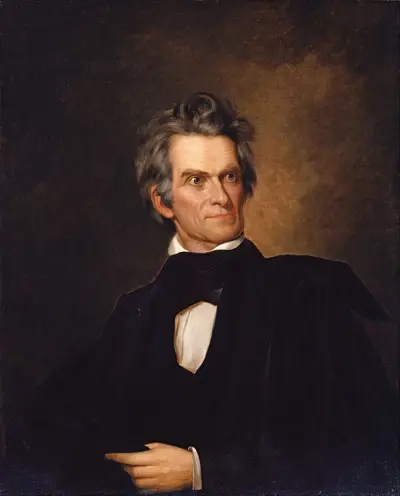
John Caldwell Calhoun was an American politician and political theorist from South Carolina who held many important positions including being the seventh vice president of the United States from 1825 to 1832, while adamantly defending slavery and protecting the interests of the white South when its residents were outnumbered by Northerners. He began his political career as a nationalist, modernizer, and proponent of a strong national government and protective tariffs. In the late 1820s, his views changed radically, and he became a leading proponent of states' rights, limited government, nullification, and opposition to high tariffs. He saw Northern acceptance of those policies as a condition of the South remaining in the Union. His beliefs and warnings heavily influenced the South's secession from the Union in 1860–1861.
