Dorothy Thompson Quotes
I know now that there are things for which I am prepared to die. I am willing to die for political freedom; for the right to give my loyalty to ideals above a nation and above a class; for the right to teach my child what I think to be the truth; for the right to explore such knowledge as my brains can penetrate; for the right to love where my mind and heart admire, without reference to some dictator’s code to tell me what the national canons on the matter are; for the right to work with others of like mind; for a society that seems to me becoming to the dignity of the human race. I shall pick no fight, nor seek to impose by force these standards on others. But let it be clear. If the fight comes unsolicited, I am not willing to die meekly, to surrender without effort. And that being so, am I still a pacifist?
Dorothy Thompson, 1894-1961, Journalist & Pacifist, Dilemma of a Pacifist,1937, Thompson was a pacifist who, like many others who saw the Fascism of Germany, Italy and Spain up close, re-examined their views and developed a militant willingness to fight for freedom and democracy. Her public reassessment was very influential among many Americans. Ironically, it was the liberals of American society like Thompson, who first expressed a willingness to fight for American freedom and democracy, while most of the dedicated conservatives were admirers of Fascism like Charles Lindbergh or were against Fascism but were isolationist and did not want to get entangled abroad.
Sourced by: Eigen's Political and Historical Quotations


Massachusetts rioters who had distressed Abigail Adams and others were pardoned for their crimes. Jefferson was responding to her concerns {592539} and providing her with the pardon news.


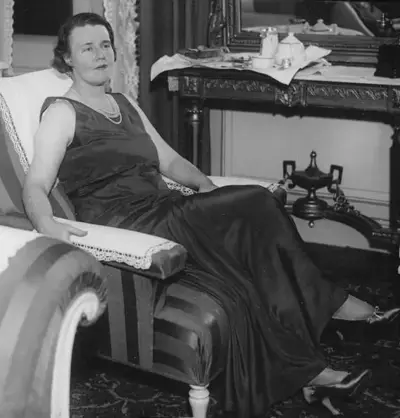
Dorothy Celene Thompson was an American journalist and radio broadcaster. She was the first American journalist to be expelled from Nazi Germany in 1934 and was one of the few women news commentators on radio during the 1930s. Thompson is regarded by some as the "First Lady of American Journalism" and was recognized by Time magazine in 1939 as equal in influence to Eleanor Roosevelt.
