Derek Walcott Quotes
I have no curiosity. I'm an island boy.
Walcott, Derek. Conversations with Derek Walcott. Edited by William Baer, University Press of Mississippi, 1996.


In the golden intellectual and science eras of Arabian Islam from 900-1300 individualism and independence of thought were much cherished virtues. In the 1100s, there began a period of theological and intellectual closing where the individual’s views were expected to conform to that of the then “proper” interpretation of the Koran and Islamic Dominance over all things. By the 1300s there were few Arab Muslims who would speak out for individual freedom of thought and rugged intellectual independence from the doctrine of the times. He was one of the few who advocated being back to the “old days” when Islam was far ahead of the intellectual thinking of the world. Few paid heed and Arab Islam has for the last 800 years been a shadow of its former intellectual achievements and has become a backward, stultified set of societies where one rarely finds an intellectual who does not depend on the community consensus and the values of the mullahs and muftis of the time rather than their own.


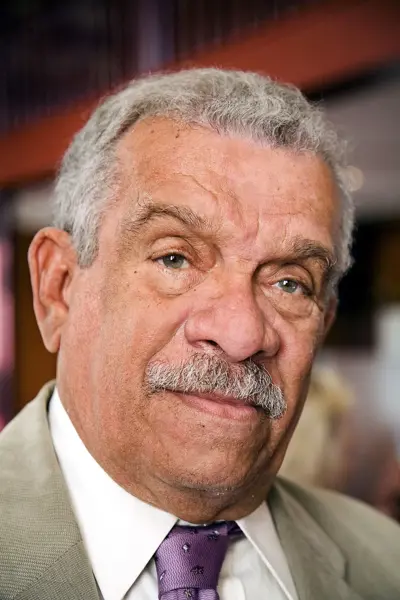
Sir Derek Alton Walcott, KCSL, OBE, OCC was a Saint Lucian poet and playwright. He received the 1992 Nobel Prize in Literature. He was the University of Alberta's first distinguished scholar in residence, where he taught undergraduate and graduate writing courses. He also served as Professor of Poetry at the University of Essex from 2010 to 2013. His works include the Homeric epic poem Omeros (1990), which many critics view "as Walcott's major achievement." In addition to winning the Nobel Prize, Walcott received many literary awards over the course of his career, including an Obie Award in 1971 for his play Dream on Monkey Mountain, a MacArthur Foundation "genius" award, a Royal Society of Literature Award, the Queen's Medal for Poetry, the inaugural OCM Bocas Prize for Caribbean Literature, the 2011 T. S. Eliot Prize for his book of poetry White Egrets and the Griffin Trust For Excellence in Poetry Lifetime Recognition Award in 2015.
