Thomas Muir Quotes
I have devoted myself to the cause of the people. It is a good cause. It shall ultimately prevail. It shall ultimately triumph.
Muir was advocating extending the vote to male, non-land owners. He was convicted, sent to the Botany Bay prison colony in Australia, escaped to France, and his cause did later triumph.
Thomas Muir, *, Scottish Barrister & Reformer, Co-Founder, Scottish Friends of the People, Statement at his trial for sedition in August 1793
Sourced by: Eigen's Political and Historical Quotations


Many Americans and Europeans fought on the side of the Republicans against the Fascists.


Hunt gave as an example Mary Smith of Stanmore. This quotation is very interesting in the history of women’s suffrage. Hunt was a strong advocate for Universal Suffrage (See {616653}.) At the time, even men had to be a taxpayer and own a sufficient amount of property to vote. Less than 20% of the population of Britain were allowed to vote. The argument at the time was that the husband would represent the family’s interest at the ballot box and there was no need for women to vote. But by facing parliament with the logical inconsistency of its position, he was able to make his point, although there were very few women like Mary Smith who were single and had the economic resources to qualify. Most widows remarried so even if they had economic resources, there was a man who could assume the then perceived role of head of the household.


Many people in Europe looked down on America and perceived it as a primitive, uncivilized place that was a huge swamp and that Yellow Fever was rampant. The swamp and Yellow Fever accusations were not exactly untrue. However, there was much more to the Colonies than the critics claimed as history would prove. Note that universal suffrage—allowing all men to vote regardless of wealth—was considered as bad as Yellow Fever and swamps by the aristocratic Europeans of the time. Many Americans had something of an inferiority complex as a result of European attitudes about the United States, but not Clinton.

RSD Party platform. The Russian Social Democratic Party was in 1887 a very modern democratic party inside the feudalism of Tsarist Russia. The Tsar and the nobility thought them wild radicals and yet their party platform was not only reasonable, but in large part influenced by the American Constitution, Bill of Rights, and then current practices in America. It is hard to believe but at the time a Russian could not work at an occupation he chose but could only do the work that was permitted by the aristocrat who owned the land he lived on. The Tsar, Alexander III, was a terrible autocrat, unlike his father who had desired some reform and abolished serfdom. All efforts at any kind of Democratic reform were put down, and Russian reformers in this party tended to split between those who still hoped for reform and those who saw violent revolution as the only hope. By 1906 the party which had no success at any of their planks of reform had split into two main subgroups—the Mensheviks and the Bolsheviks—both active revolutionary groups, but the Mensheviks tended to be more democratic and moderate and wanted to include the workers and the middle class whereas the Bolsheviks saw the middle class as part of the problem and argued for a more radical political structure. The real split occurred after the 1917 revolution when the Mensheviks lost popularity among the Russian revolutionists as not being radical or realistic enough in what it would take to transform Russia. The Bolsheviks gained control and by 1921, they had outlawed and purged the Menshevik party. That was the last hope of democracy in Russia, as the Bolsheviks model was that which guided the country until the fall of the Soviet Union.


The country was in the midst of fighting WWII and Burma was one of the battle fronts.
Note the early use of the term “March on Washington.” See {625658}.


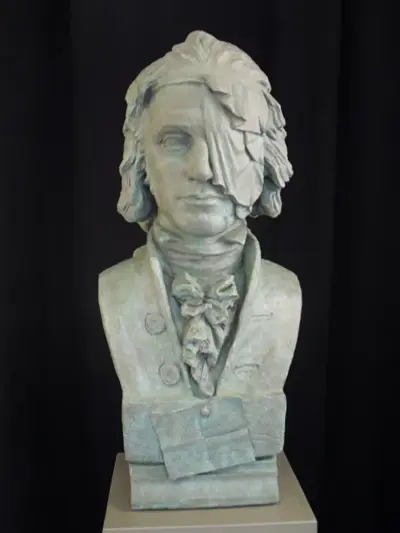
Thomas Muir, often known as Thomas Muir the Younger of Huntershill, was a Scottish political reformer and lawyer. Muir graduated from Edinburgh University and was admitted to the Faculty of Advocates in 1787, aged 22. Muir was a leader of the Society of the Friends of the People. He was the most important of the group of two Scotsmen and three Englishmen The Political Martyrs monument, Edinburgh (the others being Thomas Fyshe Palmer, William Skirving, Maurice Margarot and Joseph Gerrald). In 1793 after a show trial in Edinburgh for advocating democratic parliamentary reforms and votes for all men, they were sentenced to transportation to Botany Bay Australia for sedition.
