Charles E. Coughlin Quotes
I have dedicated my life to fight against the heinous rottenness of modern capitalism because it robs the laborer of this world's goods. But blow for blow I shall strike against Communism, because it robs us of the next world's happiness.
Charles E. Coughlin, 1891-1979, Catholic Priest, Union Party Co-founder, 1935
Sourced by: Eigen's Political and Historical Quotations


The description of Buddhists, Christians, and Communists as “fanatics” is one of the many degradations of others by the Scientology founder.

He was convicted of various felonies including threatening federal officials and sentenced to prison.

This memo was written a few days before his death and it was the last document he wrote. The communists tended to use the word “socialist” so they could make it seem that the Soviet Bloc was allied or part of the same grouping as the Scandinavian countries, India and other countries that were neither ideological communists nor controlled by the Russian or any other Communist Party. Those nations, in contrast tended to use the word, “socialist” to distinguish themselves from the Communist countries. This mostly confused many Americans. Some conflated the socialist countries and the communist countries making no distinctions. Others, like most European politicians kept the distinction in mind. Most Americans were confused as the Red Scare perpetrators tended to conflate, and the liberals tended to distinguish.

Immediately after the Russian Revolution, the provisional government appointed him as Ambassador to the United States. However, the provisional government was supplanted when the Bolsheviks took over. Not enamored of Communism, he stayed in the United States with many other Russian refugees.

3rd Earl Russell of Kingston. He favored and argued for a middle ground of a capitalistic socialism or a socialized capitalism, which is what most democracies became.


He was advocating a middle ground between corporate and wealthy individuals’ control of the government which then to a great extent existed and the Communist idea of the dictatorship of the proletariat.


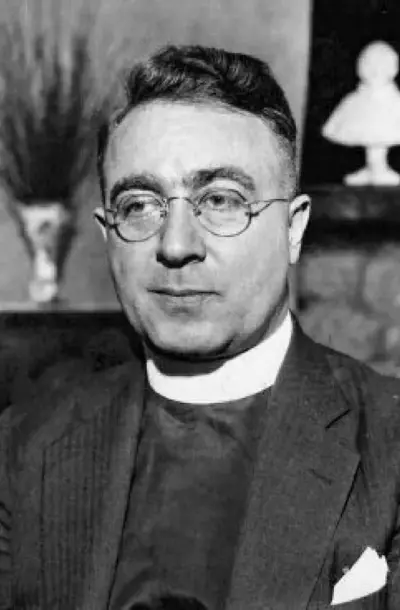
Charles Edward Coughlin, commonly known as Father Coughlin or the radio priest, was a Canadian-American Roman Catholic priest who was based in the United States near Detroit. He was the founding priest of the National Shrine of the Little Flower church. He was one of the first political leaders to use radio to reach a mass audience: during the 1930s, an estimated 30 million listeners tuned to his weekly broadcasts. He was forced off the air after his rhetoric became anti-Semitic and fascistic.
