Galileo Galilei Quotes
I have been enjoined by this Holy Office altogether to abandon the false opinion which maintains that the sun is the center and immovable, and forbidden to hold, defend, or teach the said false doctrine in any manner, and after it hath been signified to me that the said doctrine is repugnant with the Holy Scripture, I have written and printed a book, in which I treat of the same doctrine now condemned, and adduce reasons with great force in support of the same, without giving any solution, and therefore have been judged grievously suspected of heresy; that is to say, that I held and believed that the sun is the center of the universe and is immovable, and that the earth is not the center and is movable; willing, therefore, to remove from the minds of your Eminences, and of every Catholic Christian, this vehement suspicion rightfully entertained toward me, with a sincere heart and unfeigned faith, I abjure, curse, and detest the said errors and heresies, and generally every other error and sect contrary to Holy Church; and I swear that I will never more in future say or assert anything verbally, or in writing, which may give rise to a similar suspicion of me; but if I shall know any heretic, or anyone suspected of heresy, that I will denounce him to this Holy Office, or to the Inquisitor or Ordinary of the place where I may be; I swear, moreover, and promise, that I will fulfill and observe fully, all the penances which have been or shall be laid on me by this Holy Office.
Galileo was forced, under the threat of torture, imprisonment and death, to recant his scientific observations and conclusions. This historical quotation is extremely important for two reasons. First, it demonstrates the terrible effect that ideologically, rigid, religious institutions can have by corrupting scientific thinking and modernization. Second, this particular confession, and the circumstances surrounding it, were well known to the American Founding Fathers, and was one of the motivations to create the first Amendment and prevent any church’s ability to exercise this kind of tyranny over the minds of Americans. Ironically, in modern times it served as an example for the Roman Catholic Church of what to avoid in a world of constant scientific discovery, and this church has been particularly open to new science and has found very creative ways of avoiding doctrinal conflicts with modern science.
Galileo Galilei, 1564-1642, Italian Scientist, Confession at his trial by the Church. June 22, 1633
Sourced by: Eigen's Political and Historical Quotations


Note that Da Vinci predated Galileo. One big difference was that Da Vinci did not publish his heretical views, but wrote them in his private notebook. The church authorities likely did not know about his heresy.

He was being pressured to recant some of his astronomical findings and demonstrations—especially the statement that the Earth revolved around the sun. (The church doctrine had it the other way around.) Here he seeks sympathy with his plight.


This began the Church's most notorious attack on any dissent or disagreement and it was the start of the Inquisition.

The moral imperative of submission rather than allowing a war started by the aggressor, logical for Pizarro and Church leaders of the time, is the same logic of aggressors from Adolf Hitler to Saddam Hussein.

Giovanni Battista Cibo. This quotation is one of the proofs that the Inquisition was not a rogue group of zealots but represented the mainstream of the Catholic Church of the time. Note the tone whereby having a zealous inquisition is perceived almost as a “right” of which no community ought be deprived.


The Roman Catholic Church had stultified scientific thinking for over a thousand years where differing with accepted church doctrine was not only discouraged but was dangerous. Even though Hicletas—see {590328}—realized that the earth rotated around its own axis three centuries before Christ, and his view was in the literature to which learned people had access, even in 1543 Copernicus had to tread lightly with the church. He enlisted the aid of the Pope to “response block” the opposition of other church authorities. Galileo later did not play politics and had a more narrow minded Pope and Vatican to contend with, and as the world knows, came into unfortunate conflict with the Church.

Church doctrine was that the earth was flat. Augustine did not believe the contrary, but this quotation shows that a thousand years before Galileo and Columbus, there were many people who did. . There were ancients who knew about the round earth as well. See {590333} and {590334}.


Official List of groups which were prohibited from religiously criticizing the Catholic Church—the established church of Maryland. One interesting observation is that the Jesuits—a Catholic order were on this list. Catholic orders did not then subject their representatives to the authority of the local bishops and took direction only from the Pope. In the case of the Jesuits at the time, there were many who believed the Jesuits were beyond the de facto control of the Papacy and some Jesuits thought they should be—thus the two designations of Jesuits. This makes clear the fundamental intolerance that was common on many parts of Colonial America, that criticism of and heresy to the Established Church was not to be permitted. To the orthodox Catholics of Maryland, they were as concerned with the potential criticisms of Catholic Jesuits as they were with those of Puritans or Anabaptists. Compare Maryland, a Catholic colony with a huge antipathy towards Puritans, with Massachusetts, a Puritan Colony, and its strong antipathy and intolerance for Catholics. It is almost impossible to imagine a union of the American colonies without a 1st Amendment.

The Church no longer believes this of course. Having learned from this unfortunate experience and Galileo’s persecution, today the Roman Catholic Church is one of the more advanced religious institutions in accepting modern science.
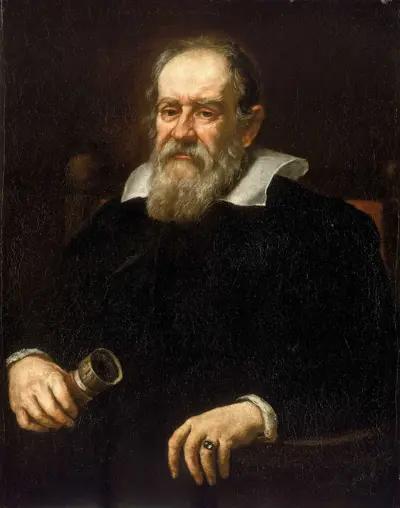
Galileo di Vincenzo Bonaiuti de' Galilei was an Italian astronomer, physicist and engineer, sometimes described as a polymath, from Pisa. Galileo has been called the "father of observational astronomy", the "father of modern physics", the "father of the scientific method", and the "father of modern science".
