Stanley Hauerwas Quotes
I have assumed my clear commitment to a Trinitarian orthodoxy was sufficient evidence that I have not intentionally ignored the role of the Holy Spirit. It may be true, however, that my work has been so Christ-centred, I may have given the impression that the Holy Spirit is an afterthought.
Hauerwas, Stanley. The Work of Theology. Wm. B. Eerdmans Publishing Co., 2015, p. 65.


Even in free America, Allen had a very difficult time getting this work printed because it was so controversial culturally and religiously. However, there was a large population of Unitarians in America at the time and Allen’s view was not that unusual. Some of the founding fathers like Adams and Jeffersion were deists who not only did not believe in the trinity but questioned the divinity of Christ.

Some Muslims believe that since God prohibits the worship of symbols and idols, no Christian who believes in the Trinity could be a believer. For those Muslims who not only determine Islamic theology but Christian theology as well, this becomes another reason for disrespect if not hatred of Christians.


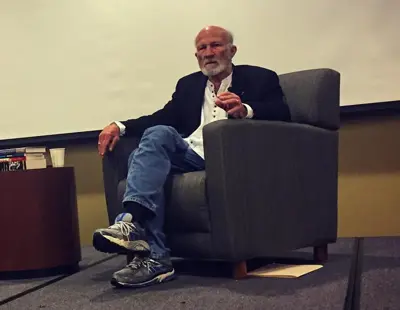
Stanley Martin Hauerwas (born 1940) is an American theologian, ethicist, and public intellectual. Hauerwas was a longtime professor at Duke University, serving as the Gilbert T. Rowe Professor of Theological Ethics at Duke Divinity School with a joint appointment at the Duke University School of Law. In the fall of 2014, he also assumed a chair in theological ethics at the University of Aberdeen. Before moving to Duke and the University of Aberdeen, Hauerwas taught at the University of Notre Dame. Hauerwas is considered by many to be one of the world's most influential living theologians and was named "America's Best Theologian" by Time magazine in 2001. He was also the first American theologian to deliver the prestigious Gifford Lectures at the University of St. Andrews in Scotland in over forty years. His work is frequently read and debated by scholars in fields outside of religion or ethics, such as political philosophy, sociology, history, and literary theory. Hauerwas has achieved notability outside of academia as a public intellectual, even appearing on The Oprah Winfrey Show.
