Wilkie Collins Quotes
I have always maintained that the one important phenomenon presented by modern society is -- the enormous prosperity of Fools
Wilkie Collins, 1824–1889, English Novelist & Playwright, No Name
Sourced by: Eigen's Political and Historical Quotations


The rising tide metaphor refers to the famous quote of John F. Kennedy: {32376}. Generally speaking a growing economy benefits all. However, after the general growth and prosperity of the Clinton administration, the George W, Bush administration produced an economy where the wealthy benefitted greatly, but middle class very little and many of the poor, not at all.

The cause of the inequality make a great difference in the role that society and community should play if it is desirable to reduce the inequality. If Muller is right, and more and more thinkers are tending to agree, then the solution lies in increased education and training as opposed to job development, anti-discrimination enforcement, and industrial development. See {634994} where Muller asserts the premise.


Bryan's concept of struggling masses included farmers and small businessmen.


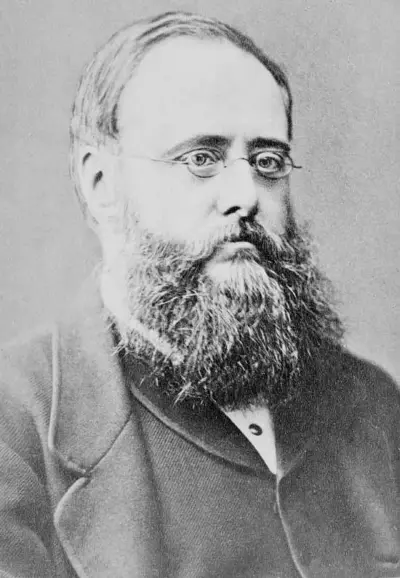
William Wilkie Collins was an English novelist and playwright known for The Woman in White (1859), and for The Moonstone (1868), which has been called the first modern English detective novel. Born to the London painter William Collins and his wife, the family moved to Italy when Collins was twelve, living there and in France for two years, which allowed the author to learn Italian and French. He worked initially as a tea merchant. After publishing Antonina, his first novel, in 1850, Collins met Charles Dickens, who became a friend and mentor. Some Collins works first appeared in Dickens's journals Household Words and All the Year Round. The two also collaborated on drama and fiction. Collins gained financial stability and an international following by the 1860s, but began to suffer from gout. He took opium for the pain, but became addicted to it. His health and his writing quality then declined in the 1870s and 1880s. Collins was critical of the institution of marriage: he split his time between widow Caroline Graves – living with her for most of his adult life, treating her daughter as his – and the younger Martha Rudd, by whom he had three children.
