William Monroe Trotter Quotes
I had been out of college and in real life but four years when I realized that the Democracy which I had enjoyed at dear old Harvard was not secure for Americans of Color, just because of their pigmentation.
He was one of the Black intellectuals who criticized the white’s favorite Negro Leader, Booker T. Washington who concentrated his efforts on Black education and self-improvement to make them more acceptable to whites. Trotter was the first man of color to earn a Phi Beta Kappa key from Harvard University. He was an outspoken critic of President Woodrow Wilson’s policy the for the first time instituted official segregation of Federal Employment and his firing of all Blacks then in executive or white collar positions in the Federal Government. Wilson, for all his supposed modernity, was one of the most racist of all American Presidents.
William Monroe Trotter, 1872–1934, Black Civil Rights Advocate, Editor & Founder of The African American Newspaper, The Boston Guardian, Co-Founder with W. E. B. Dubois of the Niagara Movement, One of the founders of the NAACP, Quoted in The Washington Post, December 21, 2014
Sourced by: Eigen's Political and Historical Quotations


One reason that this is such a noteworthy quote is that Rubio was in the midst of his campaign for the Republican Presidential Nomination where only the most dedicated and generally conservative members of the party turn out to vote in the primaries. And a very large part of them were Southern racists who switched parties in response to the Civil Rights Act passage in 1964. Since then the very conservative wing of the party has had a de facto veto on Republican presidential candidates. Rubio's statement was the view of the majority of Americans and a significant number of Republicans, but this courageous statement of his true belief's risked his chances in the primary.


Vladimir Lenin. In their quest for world revolution, the Russian Communists had more problems with arguments in the United States whose reforms and economy had produced a very high standard of living. They knew that to effect a revolution, they had to reach the middle class and the intellectuals. They had little economically to attack America with but they were able to attack the United States morally. Even though segregation was legal in America at that time, many Americans thought it immoral. Most of the rest of the world did also. So that was one of the attack points. Since the communists opposed U. S. racial segregation, many Southern segregationists used a perverted logic and accused everyone who opposed segregation of being a communist. In addition to racial segregation, the Communists attacked other forms of discrimination such as anti-Catholic, anti-Asian, and anti-Semitic (See {638737} ) behavior.


Scott was then the Special Advisor on Negro Affairs to the Secretary of War in the Woodrrow Wilson administration. Wilaon hs commited U. S. Troops to fight oversease to "make the world safe for democracy", but many blacks and whites also saw gross hypocricy in asking Negores to fight for a Jim Crow, segregated America. See the related quotation 644805. Scott was also the major aide to Booker T, Washington, one of the leading Negro educators but a very pliable man on equal rights for the Blacks. The problem for the administration was much greater than that of WWII where the president was seen as very sympathetic to Blacks while Wilson was himself a racist. And in WWII the fight against the Nazis was a fight agaisnt racial supremacy. So this quotation and Scott's role was very important to the administration.


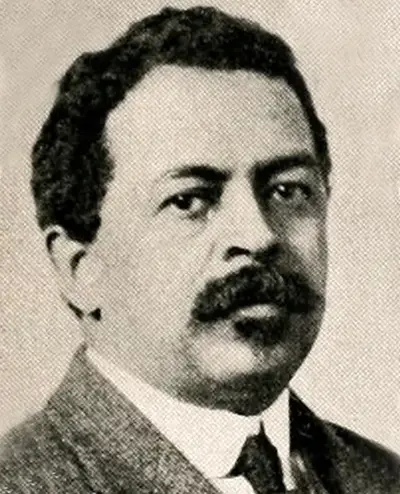
William Monroe Trotter, sometimes just Monroe Trotter, was a newspaper editor and real estate businessman based in Boston, Massachusetts, and an activist for African-American civil rights. He was an early opponent of the accommodationist race policies of Booker T. Washington, and in 1901 founded the Boston Guardian, an independent African-American newspaper he used to express that opposition. Active in protest movements for civil rights throughout the 1900s and 1910s, he also revealed some of the differences within the African-American community. He contributed to the formation of the National Association for the Advancement of Colored People (NAACP).
