Douglas Coupland Quotes
I find it hard to believe that human beings are the crowning achievement of life on earth. Something better than us has to come along.
Coupland, Douglas. Microserfs. HarperCollins, 1995.


Darwin believed at the time that large populations were critical to national success and development. The next 100 years would prove that large population was a handicap to progress and real growth of standard of living.

Fisher, a brilliant scientist and mathematician, engaged in some major blunders like denying that tobacco had any relationship to lung cancer and other disease. This was another. His “conclusion” that the more “successful” members of society should breed in preference to the less successful. There are three major fallacies in his argument and that of other eugenics supporters other than the obvious ethical and moral problems. First, human success in any society is determined by both genetic and environmental factors. In general, it is currently impossible to know who the successful would be if environmental factors were equal. Second, our concept of success is quite narrow from an evolutionary point of view. The most successful humans might be those who produce that most children, or those who extend man’s habitat, or those who will be most resistant to a pandemic that will arise in the near future. Third, by the standards of much of English society at the time, the most “successful” people were the monarchy and heredity aristocracy, There was already too much inbreeding in these groups and increasing this groups breeding rather than others would not only weaken the species over time, but would limit the variation that is necessary for natural selection and further evolution of the human species.


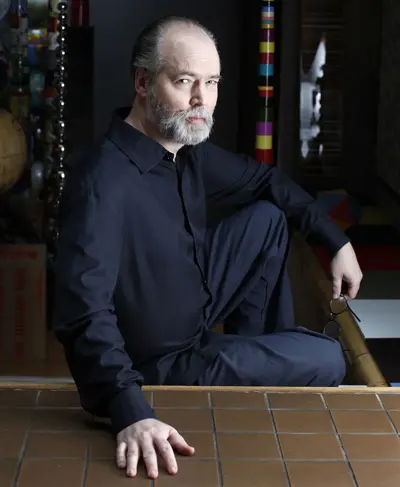
Douglas Coupland OC OBC (born 1961) is a Canadian novelist and artist. His fiction is complemented by recognized works in design and visual art arising from his early formal training. His first novel, the 1991 international bestseller Generation X: Tales for an Accelerated Culture, popularized the term such as McJob. He has published thirteen novels, two collections of short stories, seven non-fiction books, and a number of dramatic works and screenplays for film and television. He is a columnist for Financial Times. He is also a frequent contributor to The New York Times, e-flux journal, Dis, and Vice. His art exhibits include Everywhere Is Anywhere Is Anything Is Everything which was exhibited at the Vancouver Art Gallery, and the Royal Ontario Museum and the Museum of Contemporary Canadian Art, (now the Museum of Contemporary Art Toronto) and Bit Rot at Rotterdam's Witte de With Center for Contemporary Art and the Villa Stuck.
