Martin Luther King Jr. Quotes
I feel that when a white child goes to school only with white children, unconsciously that child grows up in many instances devoid of a world perspective. There is an unconscious provincialism, and it can develop into an unconscious superiority complex just as a Negro develops an unconscious inferiority complex.
King, Martin Luther, Jr. Interview on Meet the Press. NBC, 17 Apr. 1960.


This seems counter intuitive, but Stenner is not referring to the reaction of all people. She argues that such programs do not change the behavior of those who are already tolerant and accept multiculturalism and pluralism, and and often backfire with people we would like to be more tolerant because the primary reason for their intolerance is an authoritarian personality. These people cannot fare well with all the differences and little that is structured as right. She and others who have had experience with authoritarian personalities urge that we not try and persuade the of the desirability of allowing a society to have many different cultures with no dominant norm. Instead, they urge that programs to make authoritarian personalities behave with tolerance is to take a very rigid and authoritarian approach. The Government has made laws that requires all American citizens to be tolerant of different races, genders, cultures, sexual orientation. To maintain the unity of our society, we all most behave that way. Liberals, often find this hard to do as to them tolerance is such a fundamental value that everyone should accept it as desirable and see its virtue—they want hearts and minds. Steiner argues that they should forget about hearts and minds reading tolerance. With authoritarian personalities, get the behavior and leave it at that. For them the moral appeal is to obey the law.


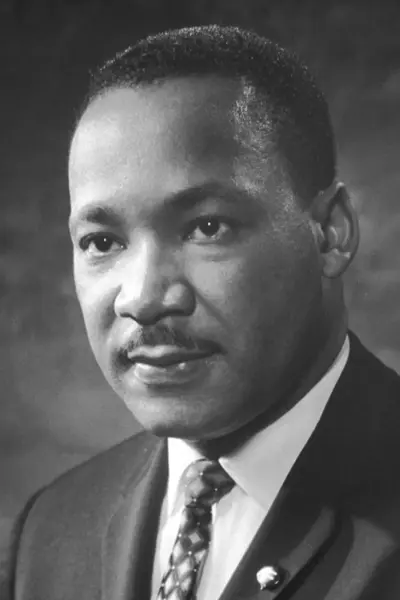
Martin Luther King Jr. was an African American Baptist minister and activist who became the most visible spokesperson and leader in the American civil rights movement from 1955 until his assassination in 1968. King advanced civil rights through nonviolence and civil disobedience, inspired by his Christian beliefs and the nonviolent activism of Mahatma Gandhi. He was the son of early civil rights activist Martin Luther King Sr.
